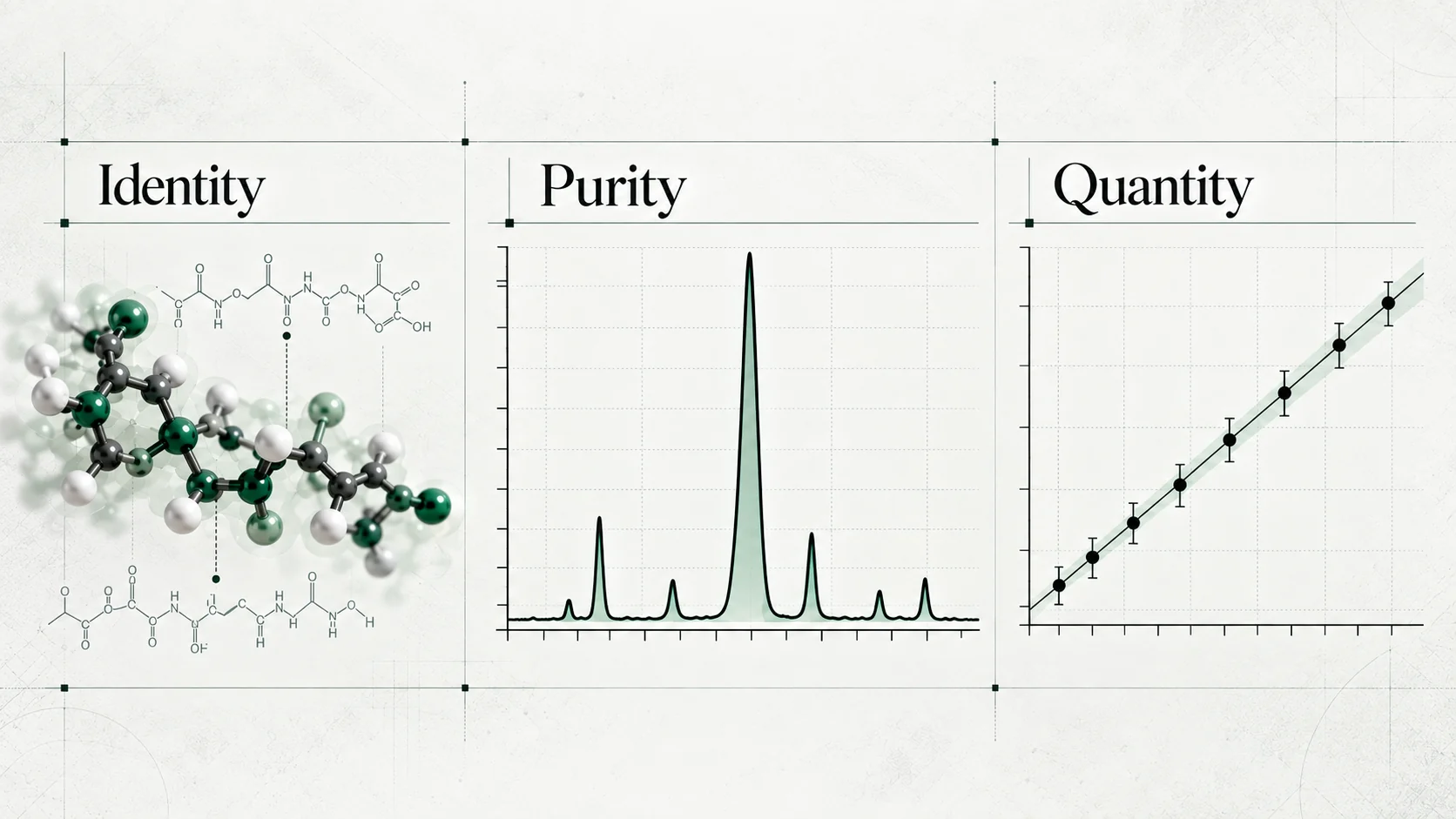
Analytical Testing
Understanding Peptide Analytical Testing
Identity, purity and quantity answer different analytical questions. Read each measurement against its method and limitations when interpreting an analytical report.
RESEARCH USE NOTICE
All products on this website are supplied strictly for in-vitro laboratory research.
They are not intended for human or veterinary use, therapeutic application, or bodily introduction.
By entering this site, you confirm:
FIRST-TIME CUSTOMERS
Enter your email and receive a one-time discount code, plus Lynx updates and restock emails, subject to eligibility.
Check your inbox. If eligible, your unique 10% welcome code will be sent by email.
POPULAR SEARCHES
Press Esc to close
Peptide science and research
Explore our guides on peptide structures, laboratory testing, storage and stability, and the scientific evidence behind different compounds. Each guide covers key concepts, testing methods and findings from published research, with references for further reading.
29 guides
Analytical Testing
Identity, purity and quantity answer different analytical questions. Read each measurement against its method and limitations when interpreting an analytical report.
Documentation
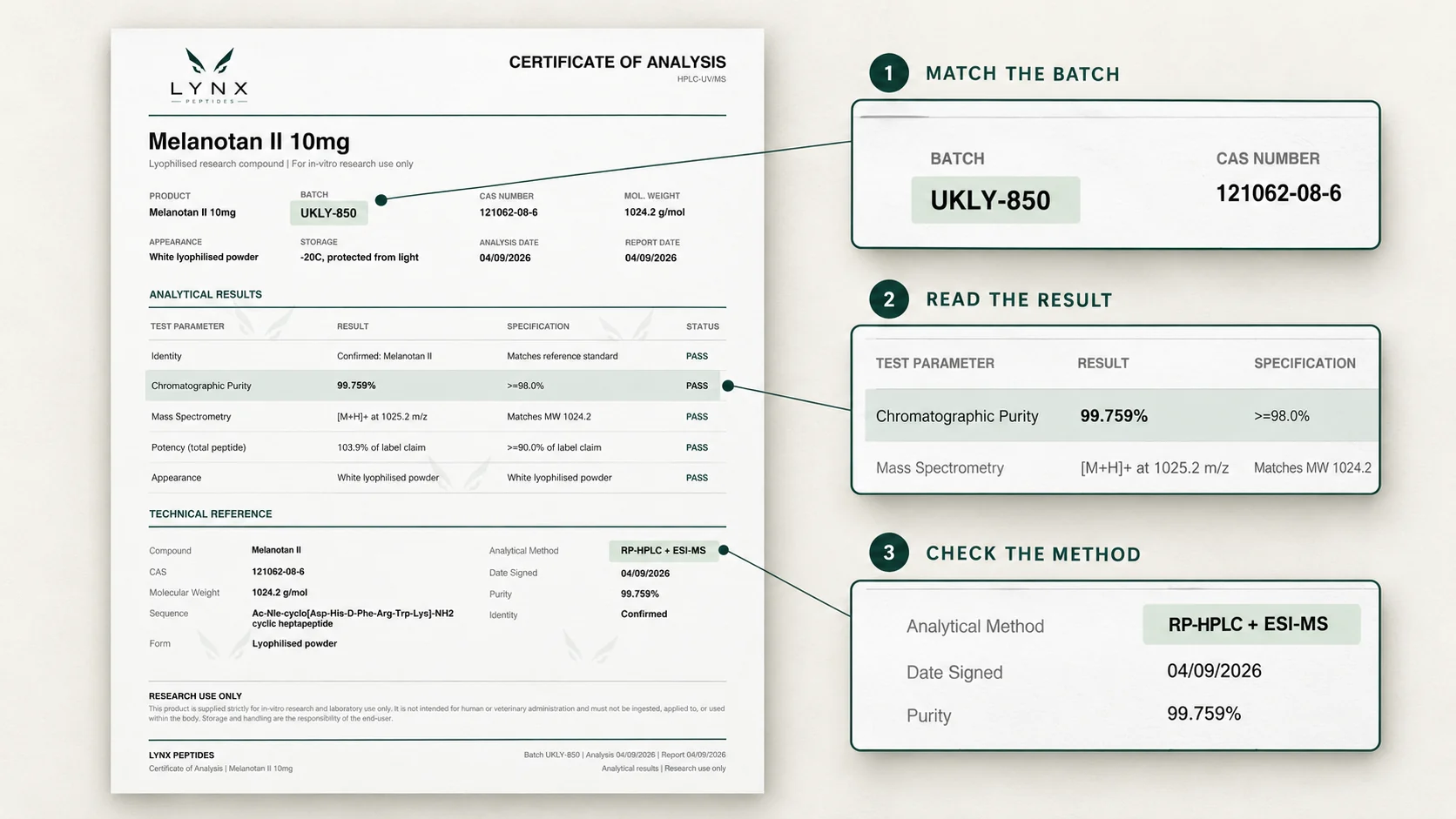
A practical guide to matching a peptide analytical report to its sample or batch, reading the methods and results, and recognising what the evidence does and does not establish. Includes a step-by-step review checklist.
Peptide Science
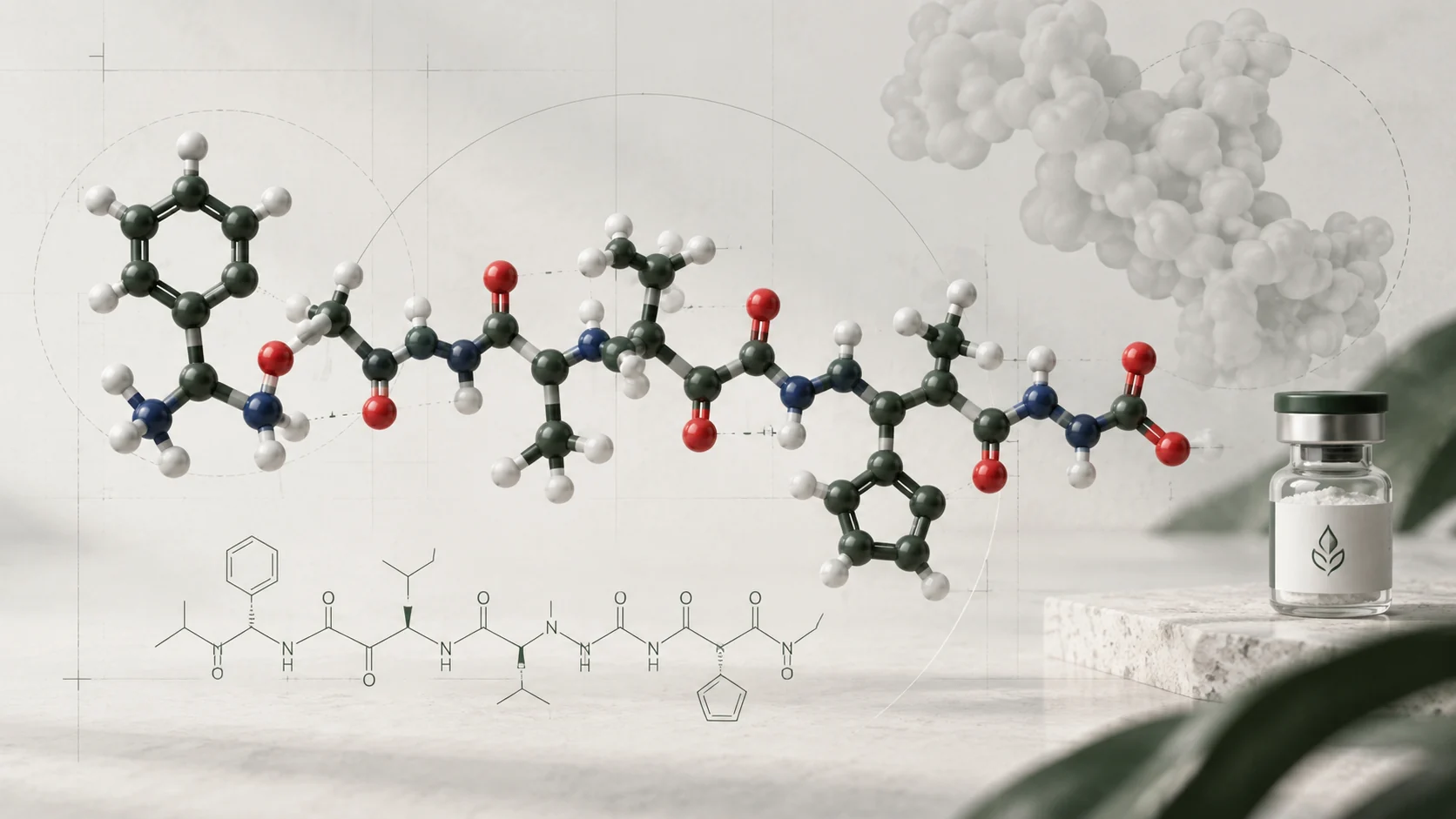
Peptide chemistry, from amino-acid residues and sequence notation to cyclic structures, terminal modifications and molecular mass. Check molecular descriptions against analytical evidence and distinguish them from biological research findings.
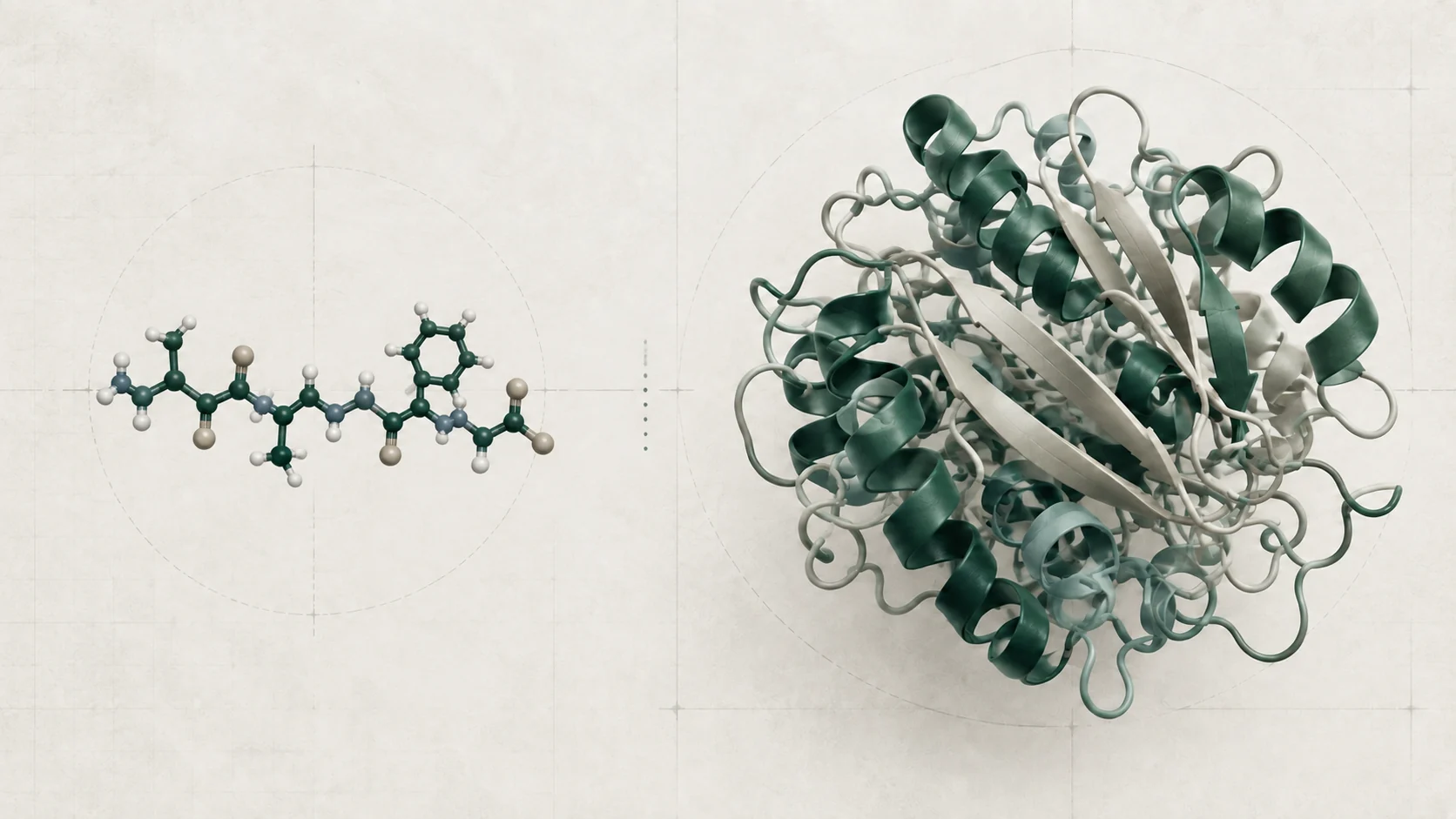
Peptide Science
Understand how peptides and proteins relate, why no single length boundary settles the distinction, and what sequence and structural information can tell you.
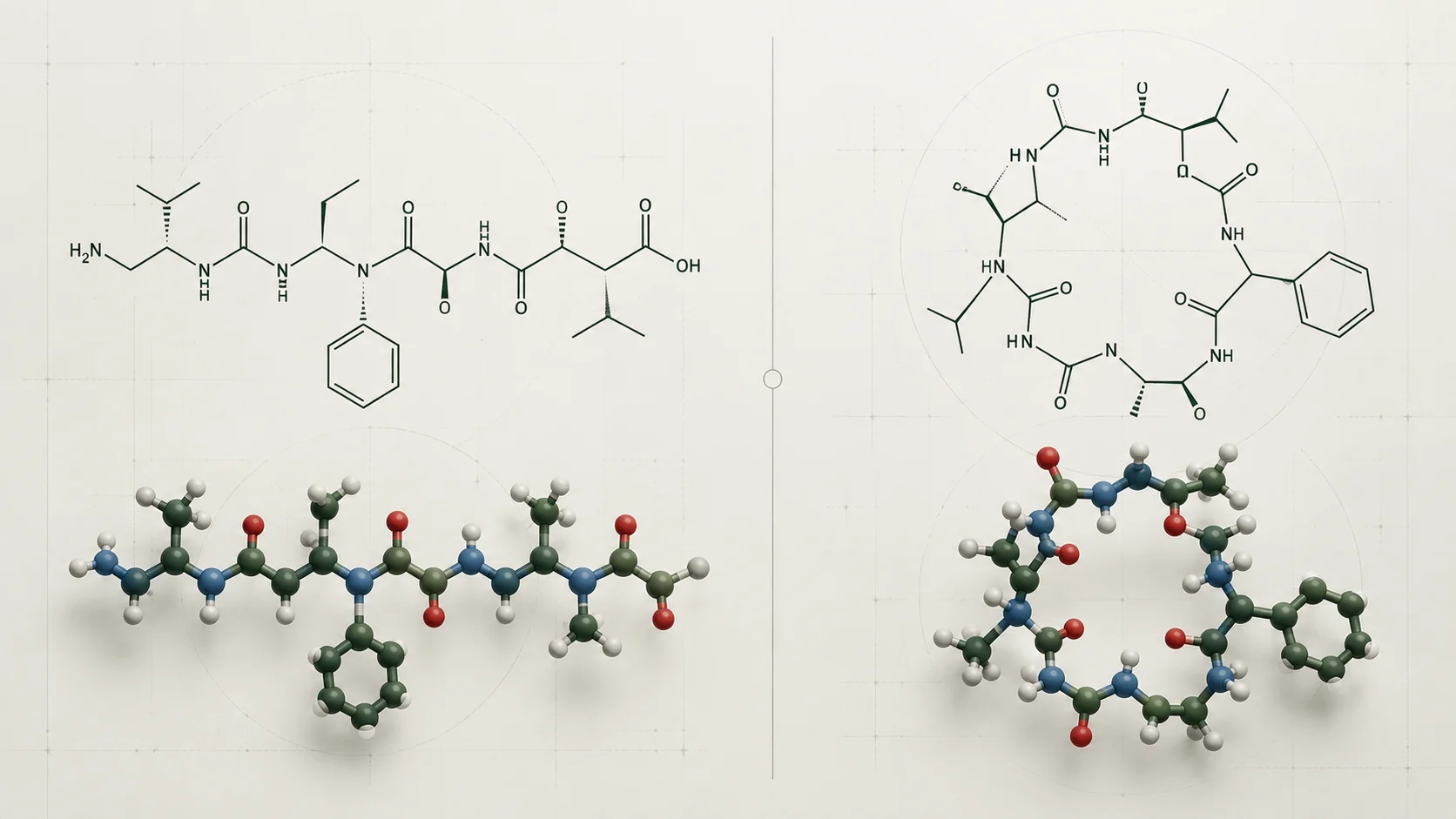
Peptide Science
A structural guide to open peptide chains, different ring linkages, molecular conformation and the information needed to describe a peptide accurately.
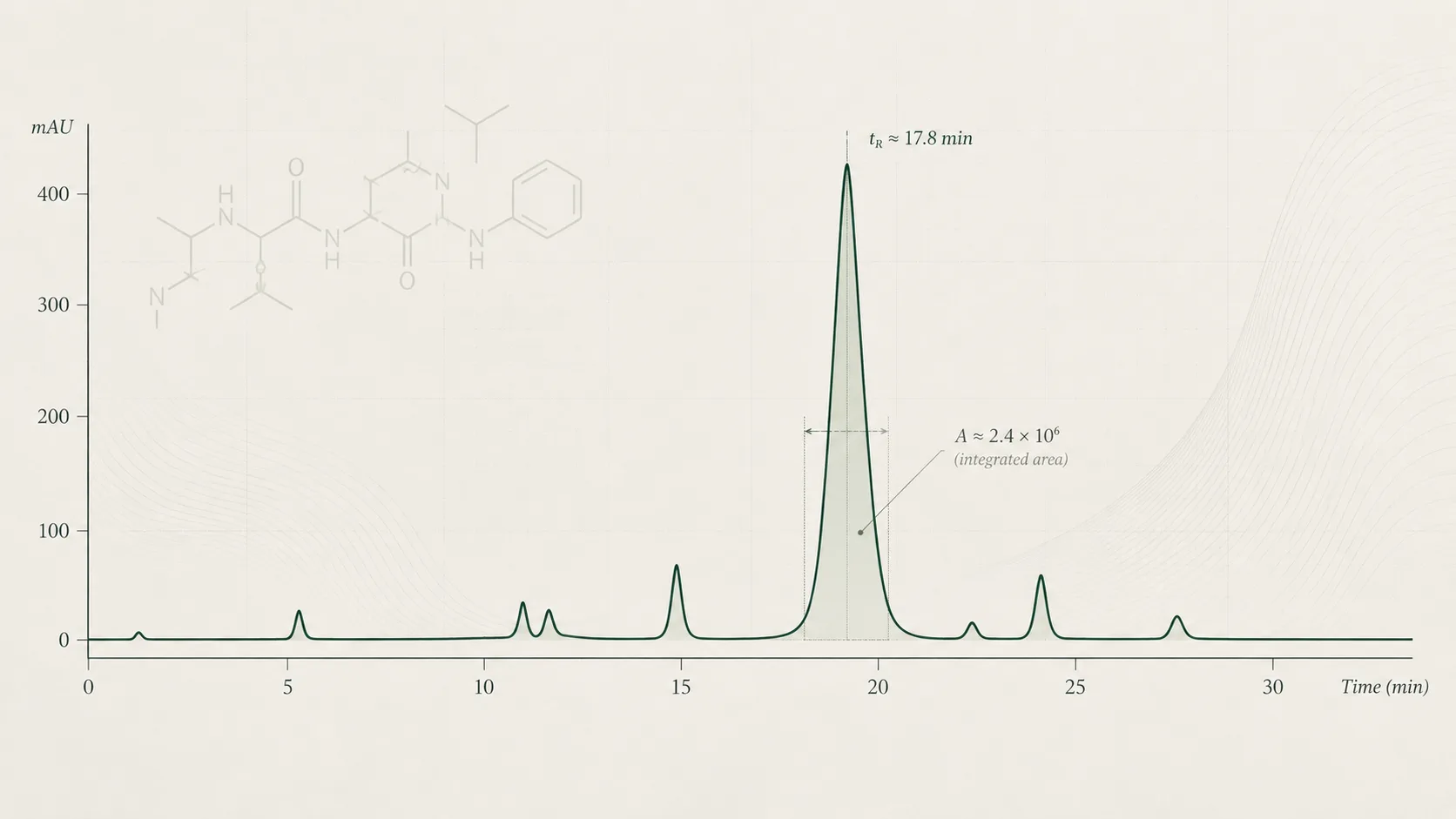
Analytical Testing
A closer look at HPLC peptide purity, from chromatogram axes and peak areas to detector response, co-elution and integration. Learn what an area percentage describes and what evidence is needed for identity, mass purity and content.
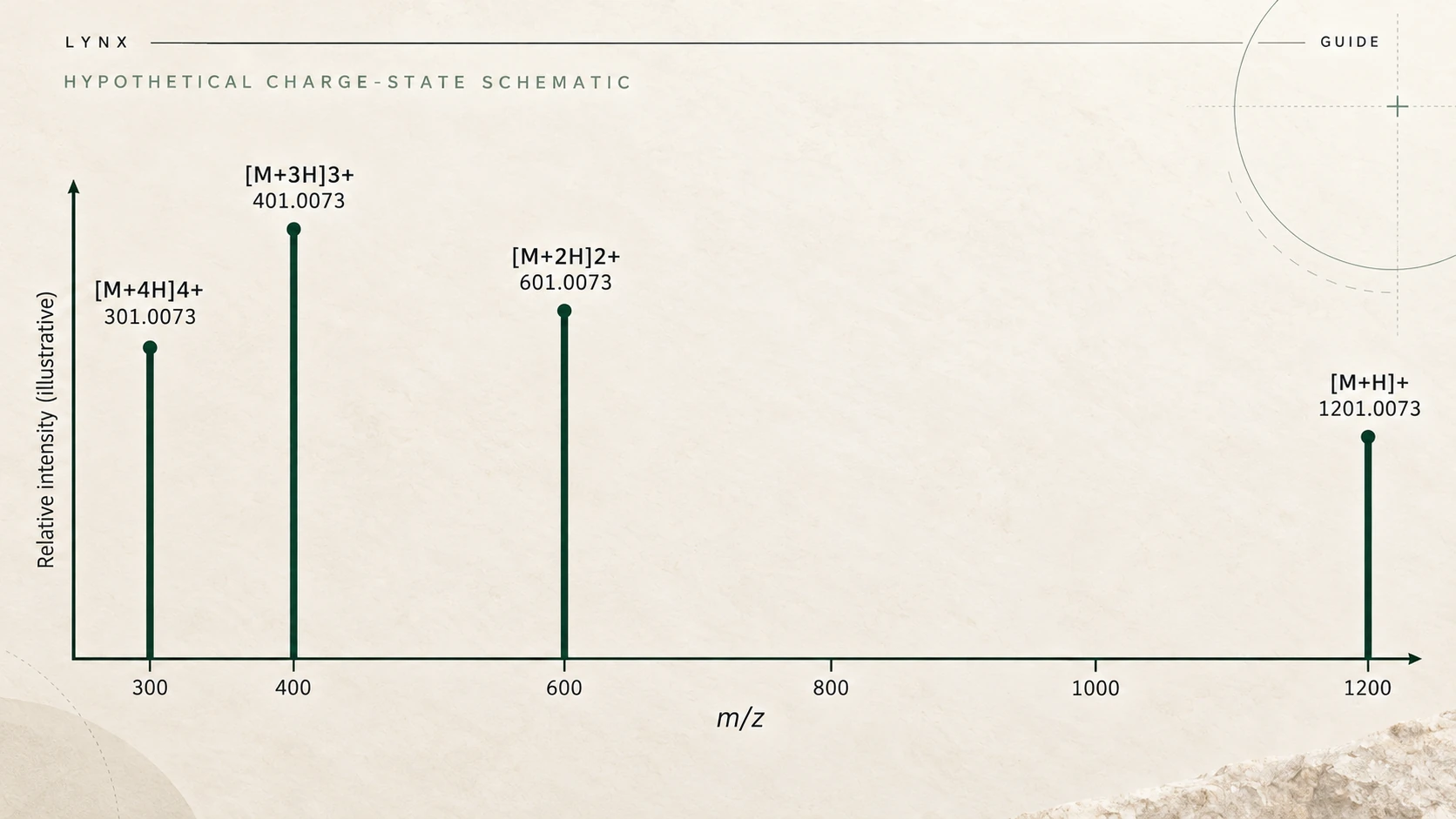
Analytical Testing
Understand charge states, isotope patterns and fragmentation evidence, and why a matching mass does not establish complete peptide identity.
Analytical Testing
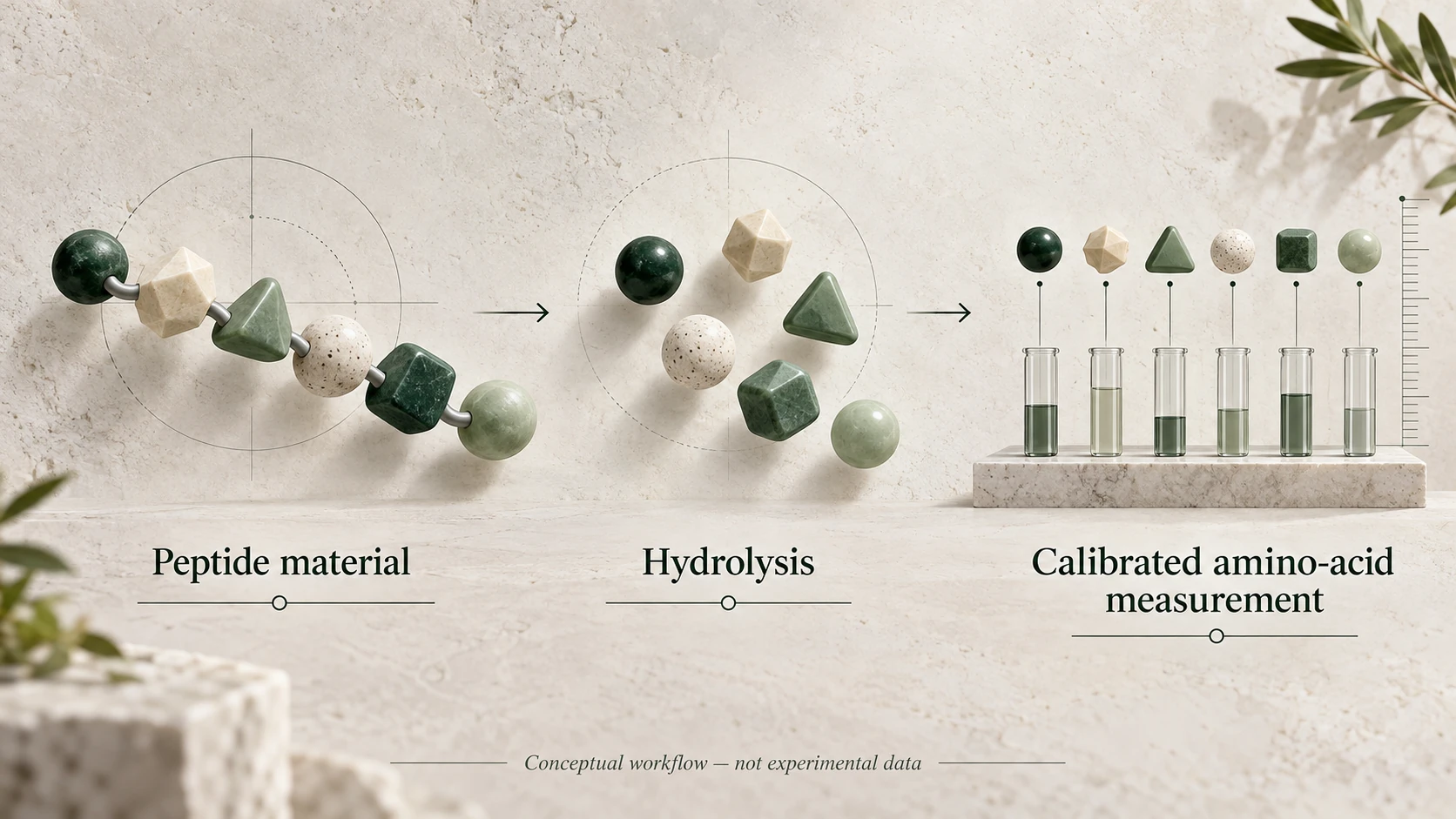
Learn how hydrolysis, calibration and impurity correction affect peptide-content measurements and what a useful analytical report should disclose.
Analytical Testing
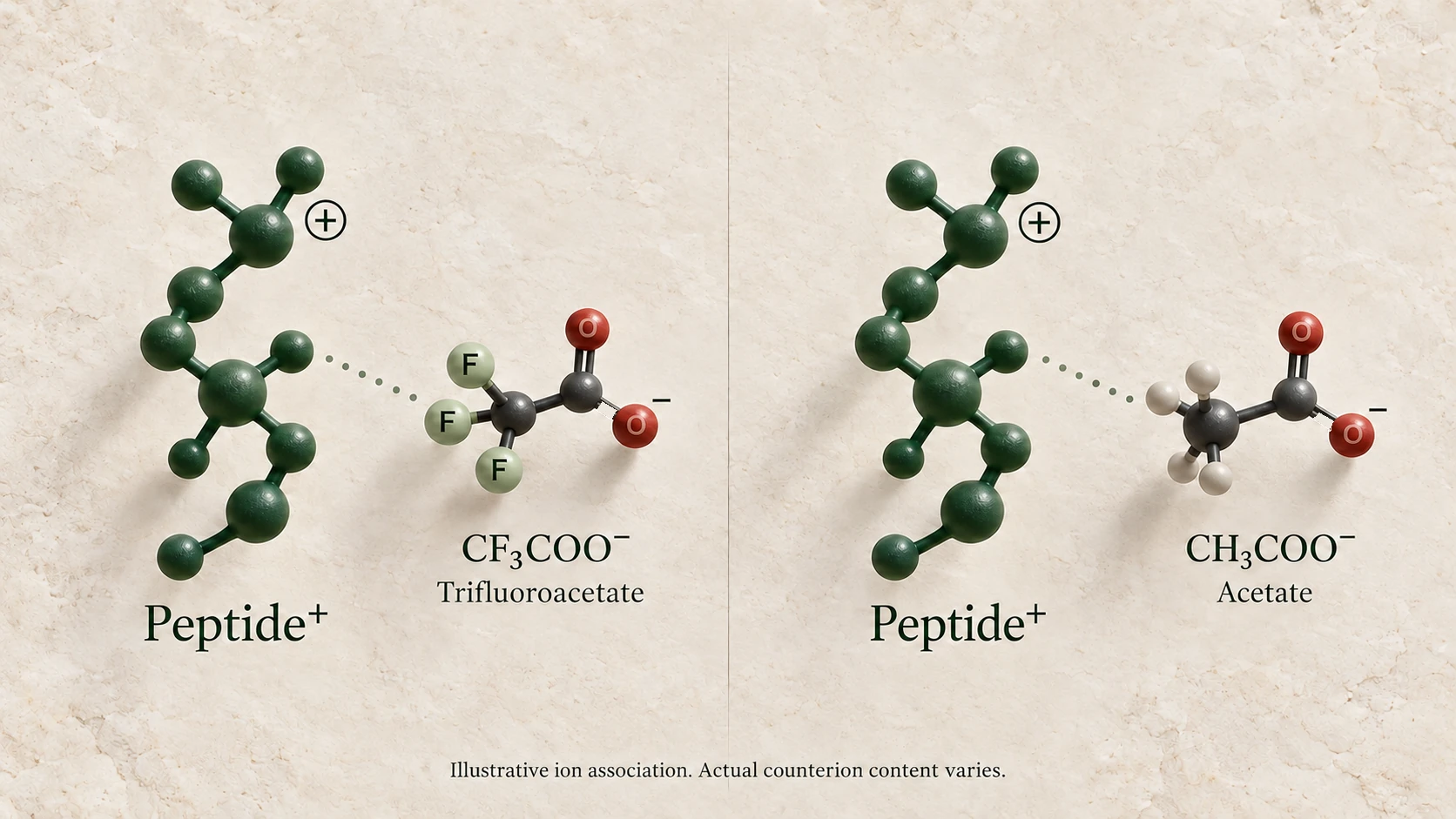
Understand how TFA and acetate may accompany charged peptides, why a peptide mass or HPLC purity result does not measure them, and how to read counterion-specific evidence.
Peptide Science
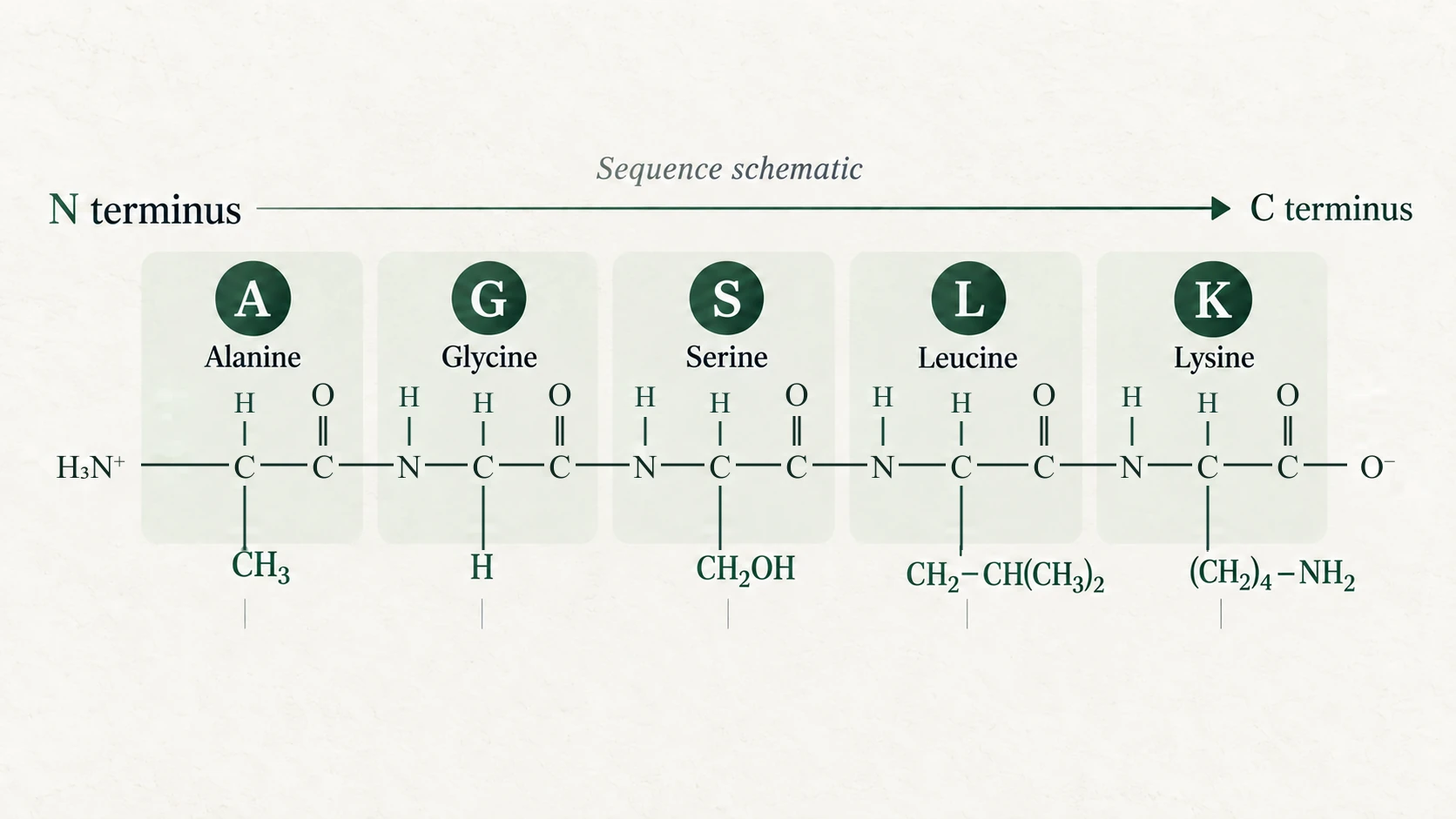
A practical introduction to N-to-C sequence direction, amino-acid codes, residue numbering, terminal modifications, D residues, fragments and ring annotations.

Peptide Science
Understand freeze-drying, residual moisture and why the appearance of a dried peptide material cannot replace analytical evidence.
Peptide Science
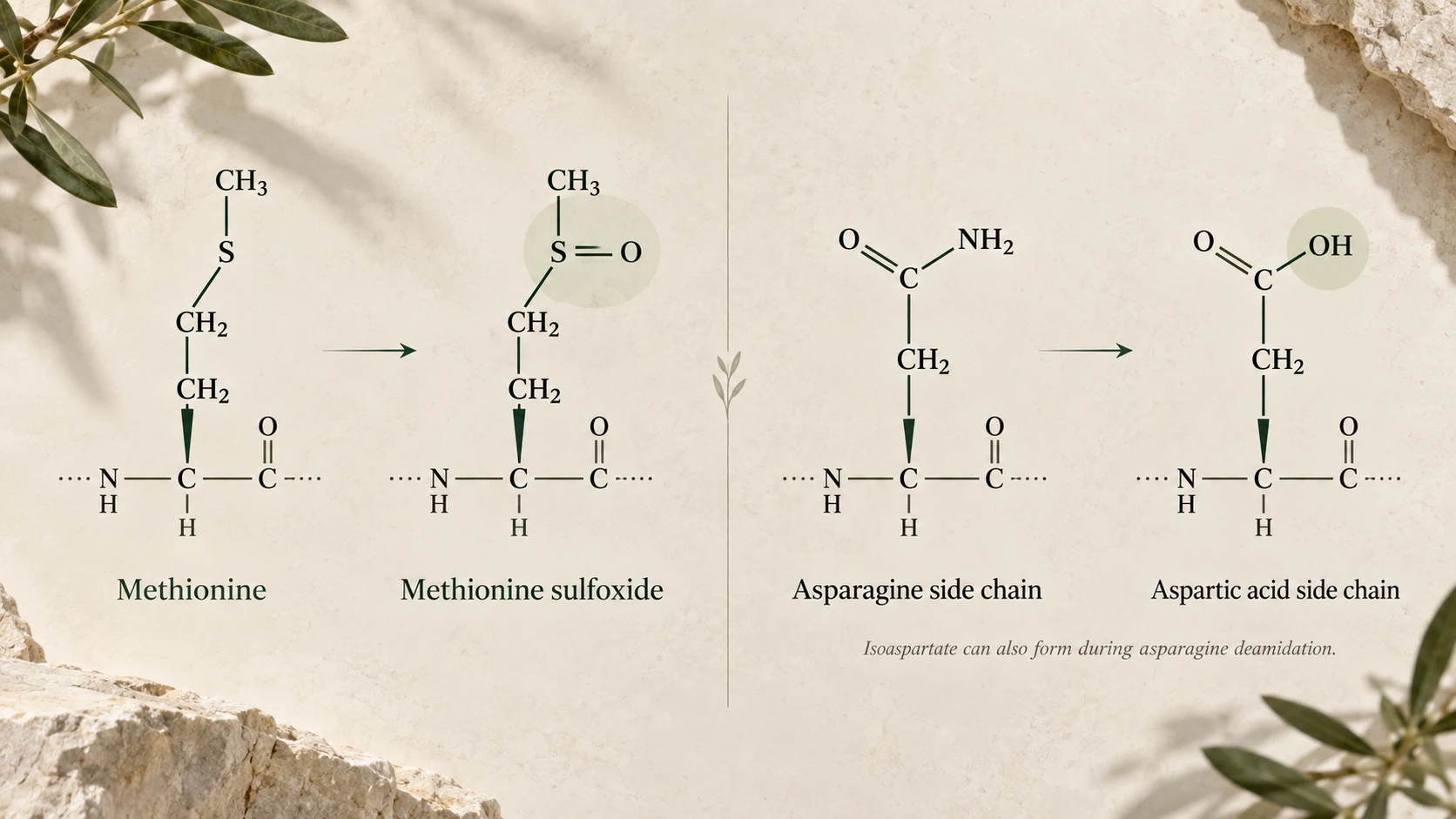
Explore oxidation, deamidation and the limits of chromatography and mass spectrometry when characterising changes in peptide materials.
Peptide Science
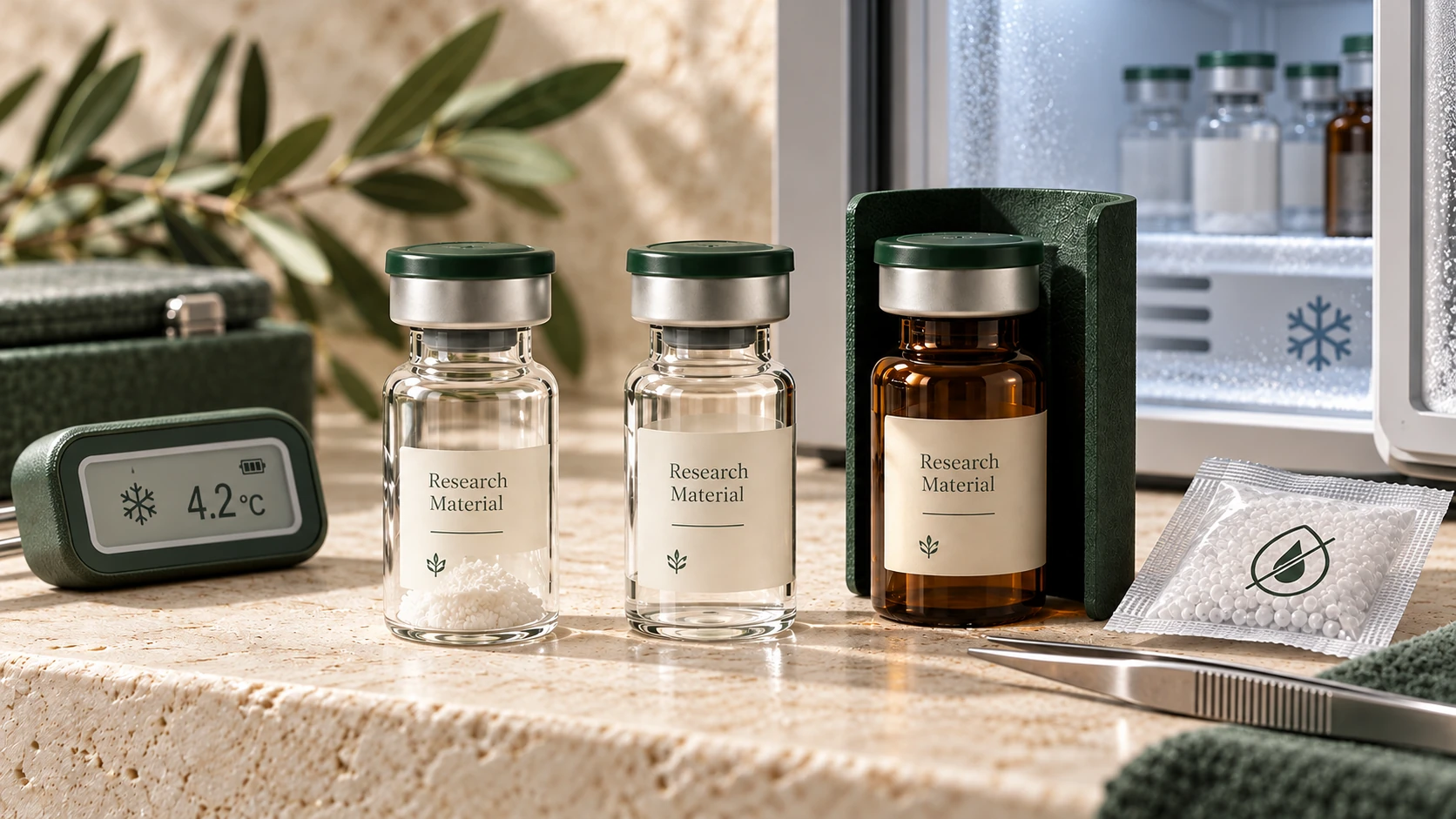
Learn how temperature, moisture, light and handling affect peptide stability, and why storage requirements differ between dry powders and prepared solutions.
Peptide Science
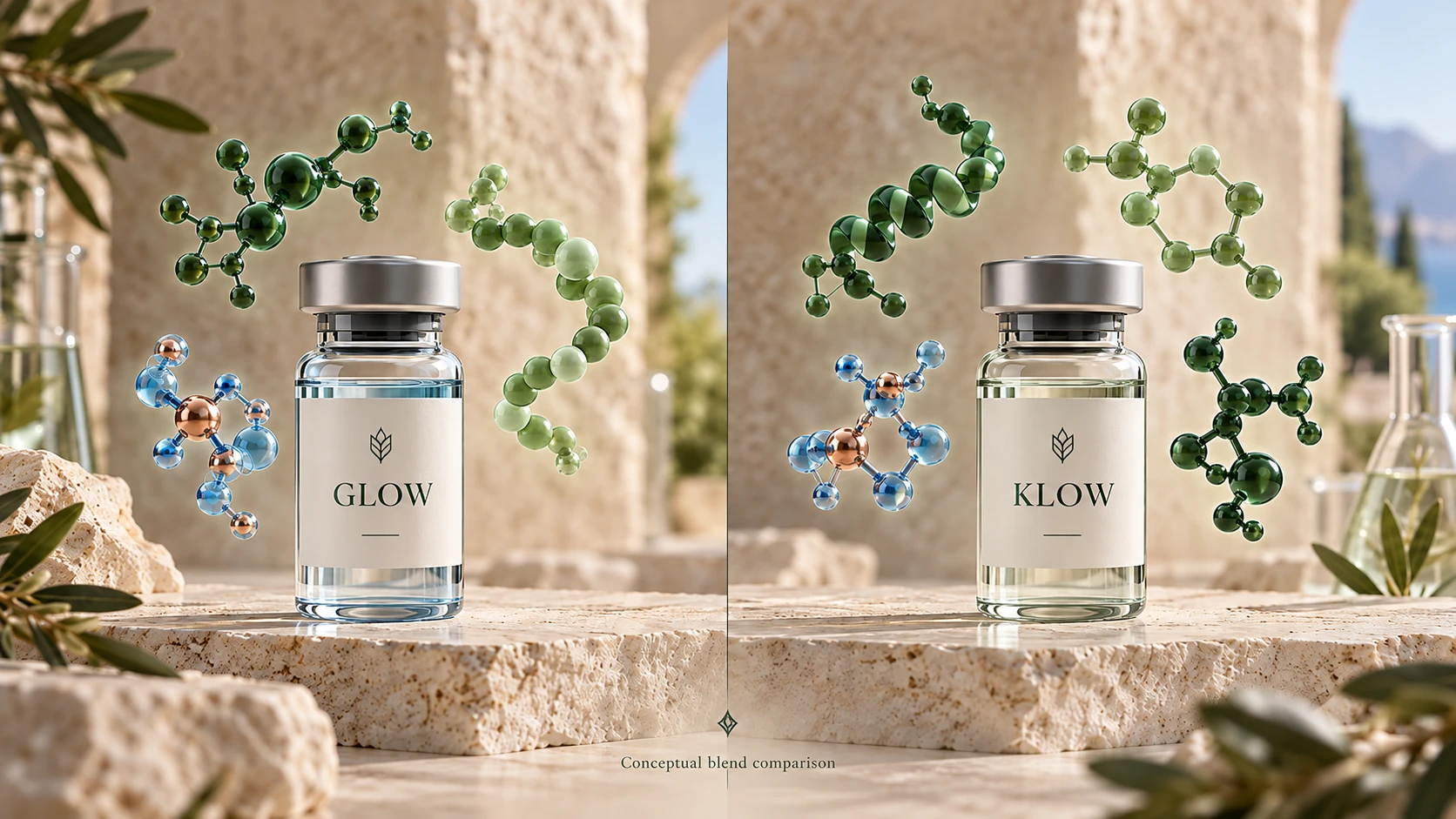
GLOW and KLOW differ by the addition of KPV. Compare their declared ingredients and learn how researchers assess the identity and composition of peptide mixtures.
Peptide Science
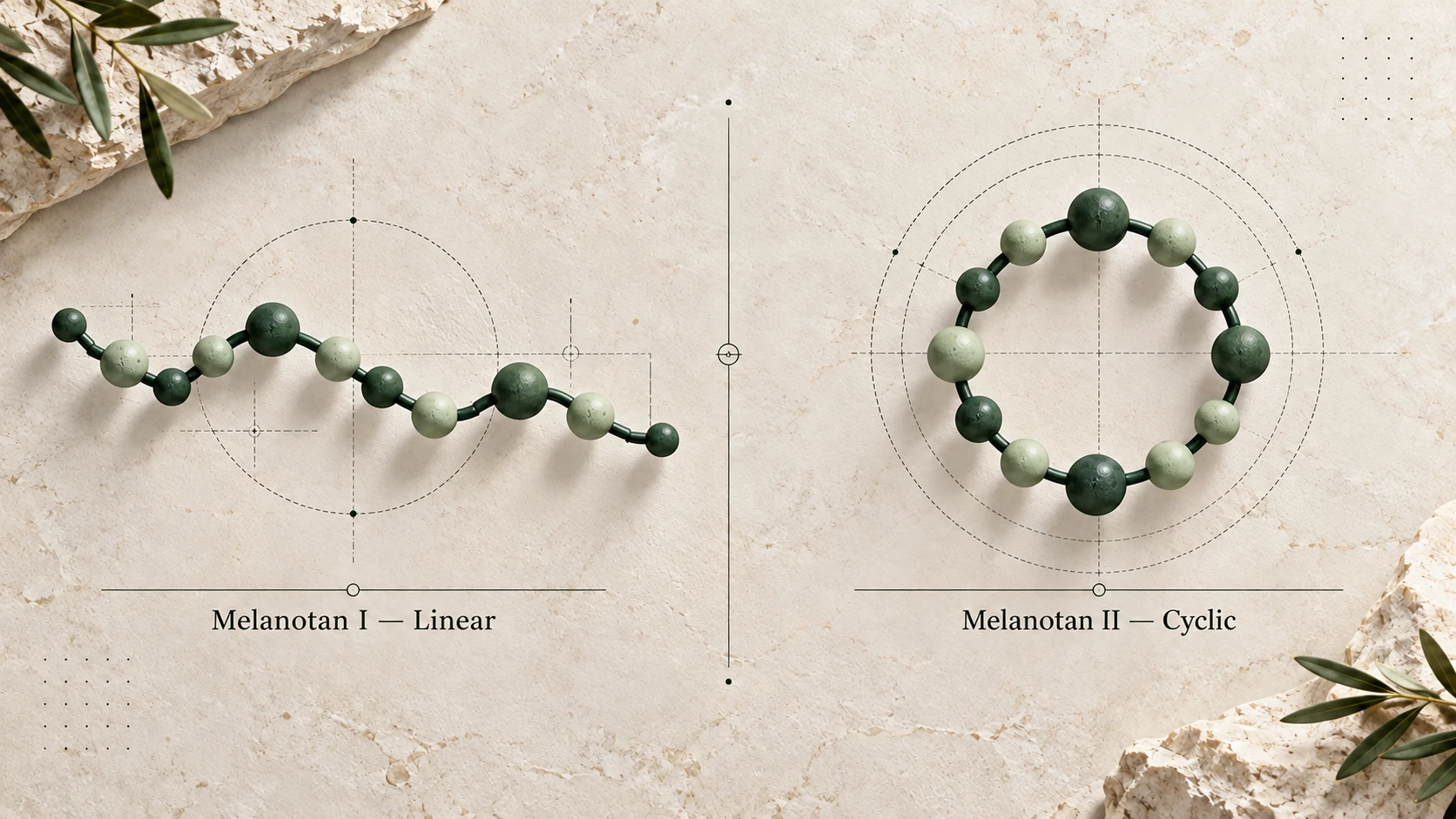
Melanotan I and Melanotan II are related peptides with different molecular structures. Explore their linear and cyclic forms and the research examining their biological activity.
Peptide Science
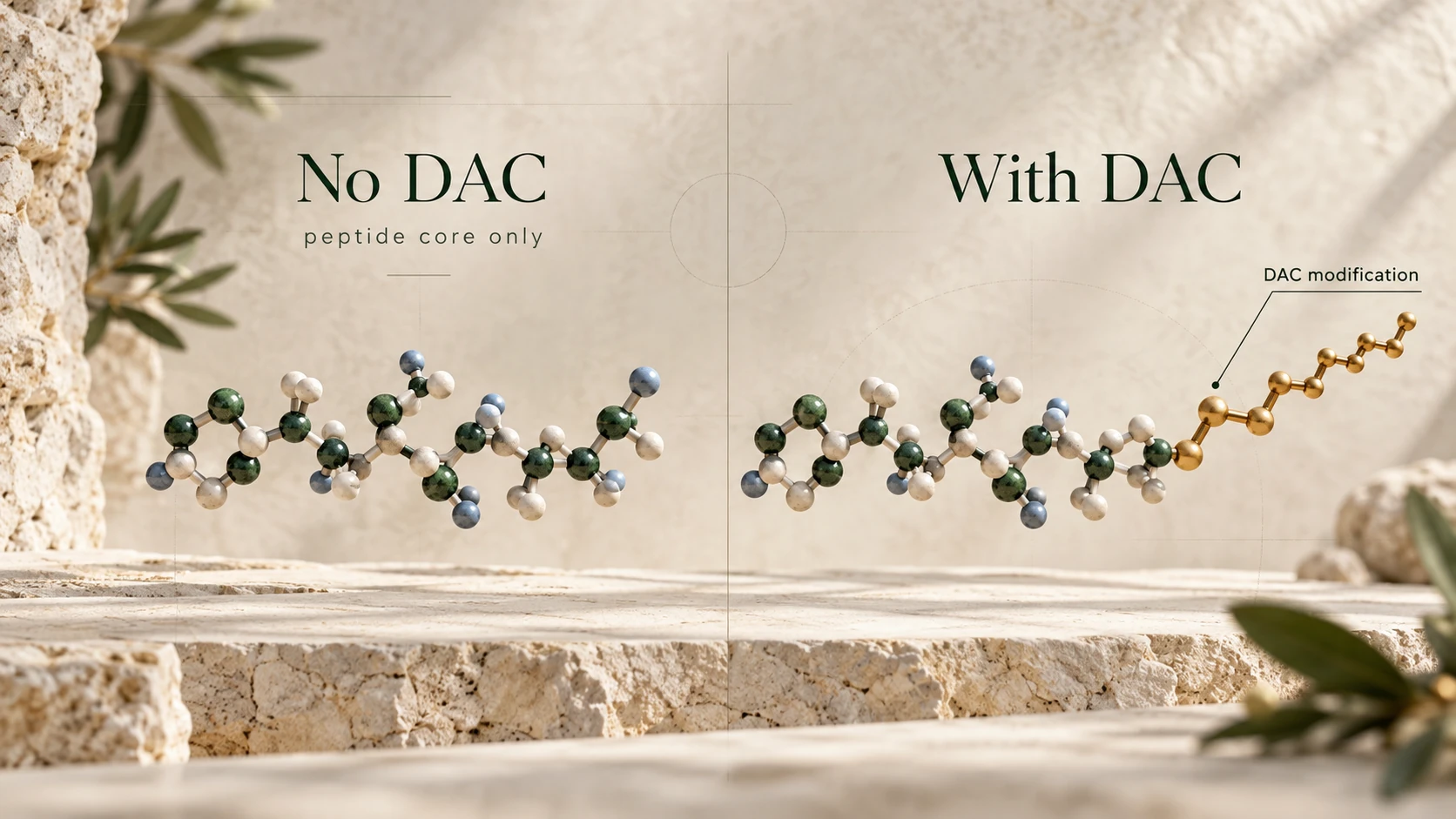
Learn how the DAC modification enables albumin attachment, why exact peptide identity matters and what published CJC-1295 studies measured.
Peptide Science
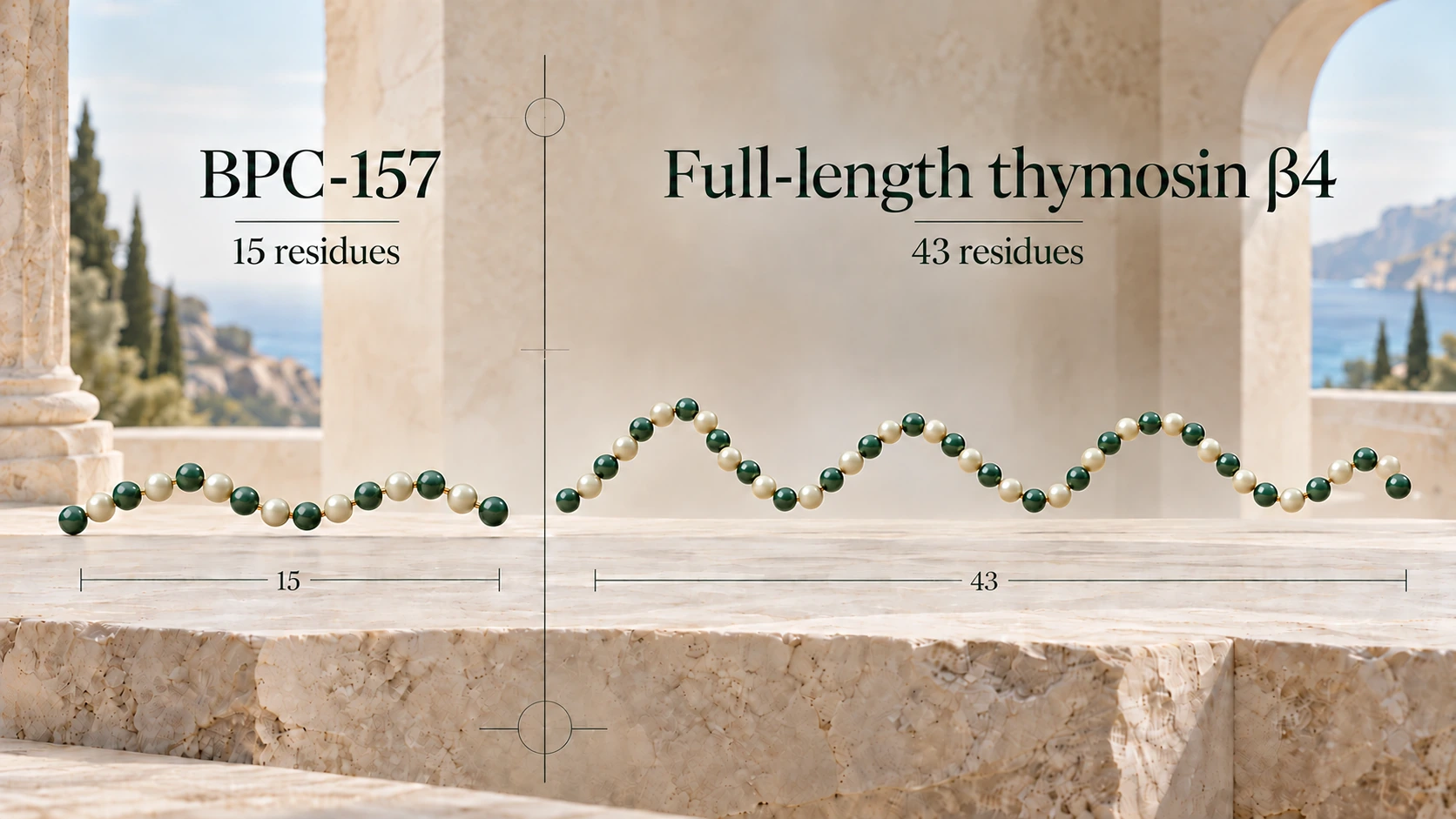
Explore how BPC-157 differs from thymosin beta-4 and its fragments, why the TB-500 name needs care and how to interpret the preclinical comparisons.
Peptide Science
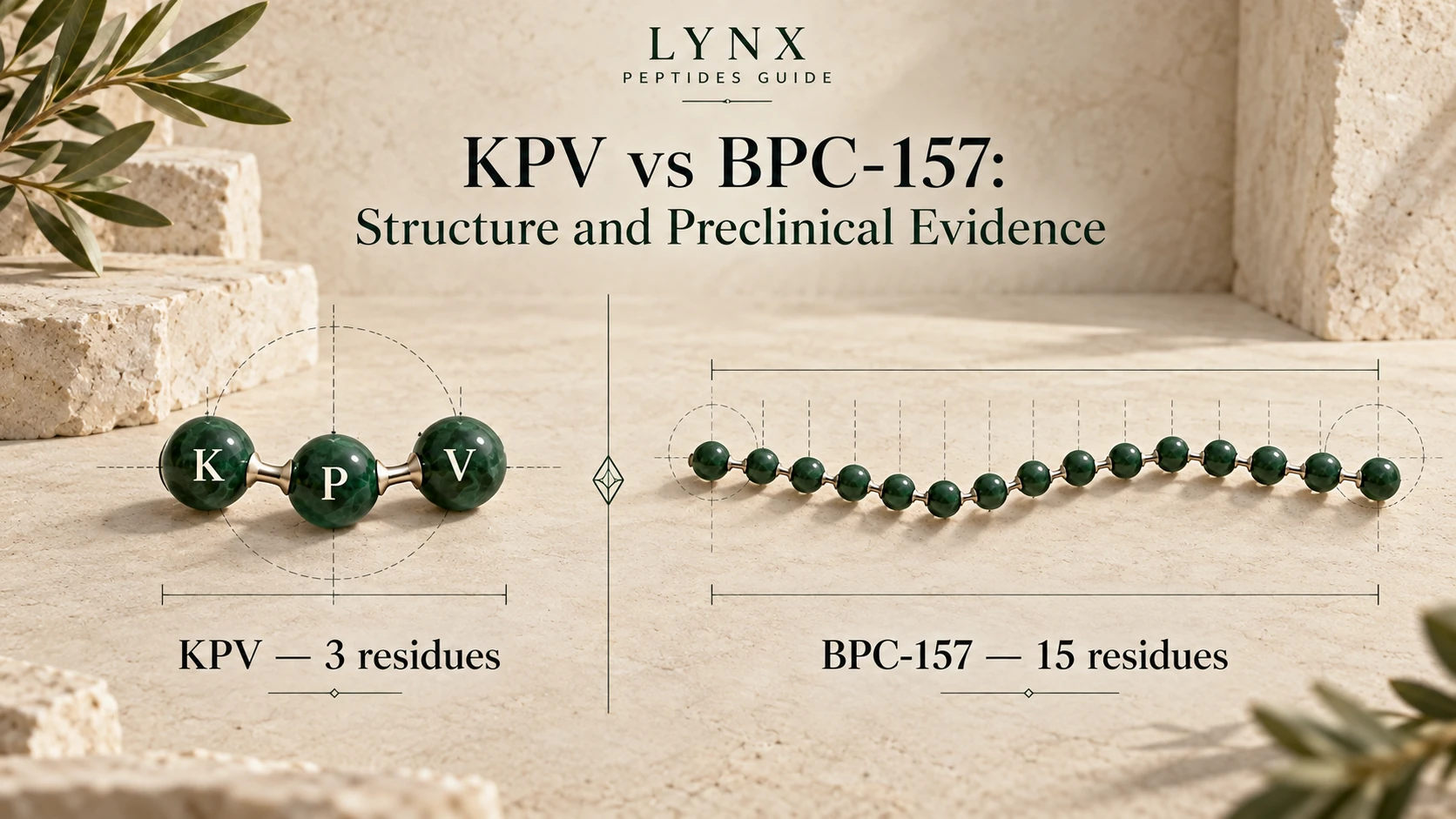
Compare the three-residue KPV sequence with 15-residue BPC-157, and explore how peptide transport, experimental models and delivery systems shape the research.
Analytical Testing
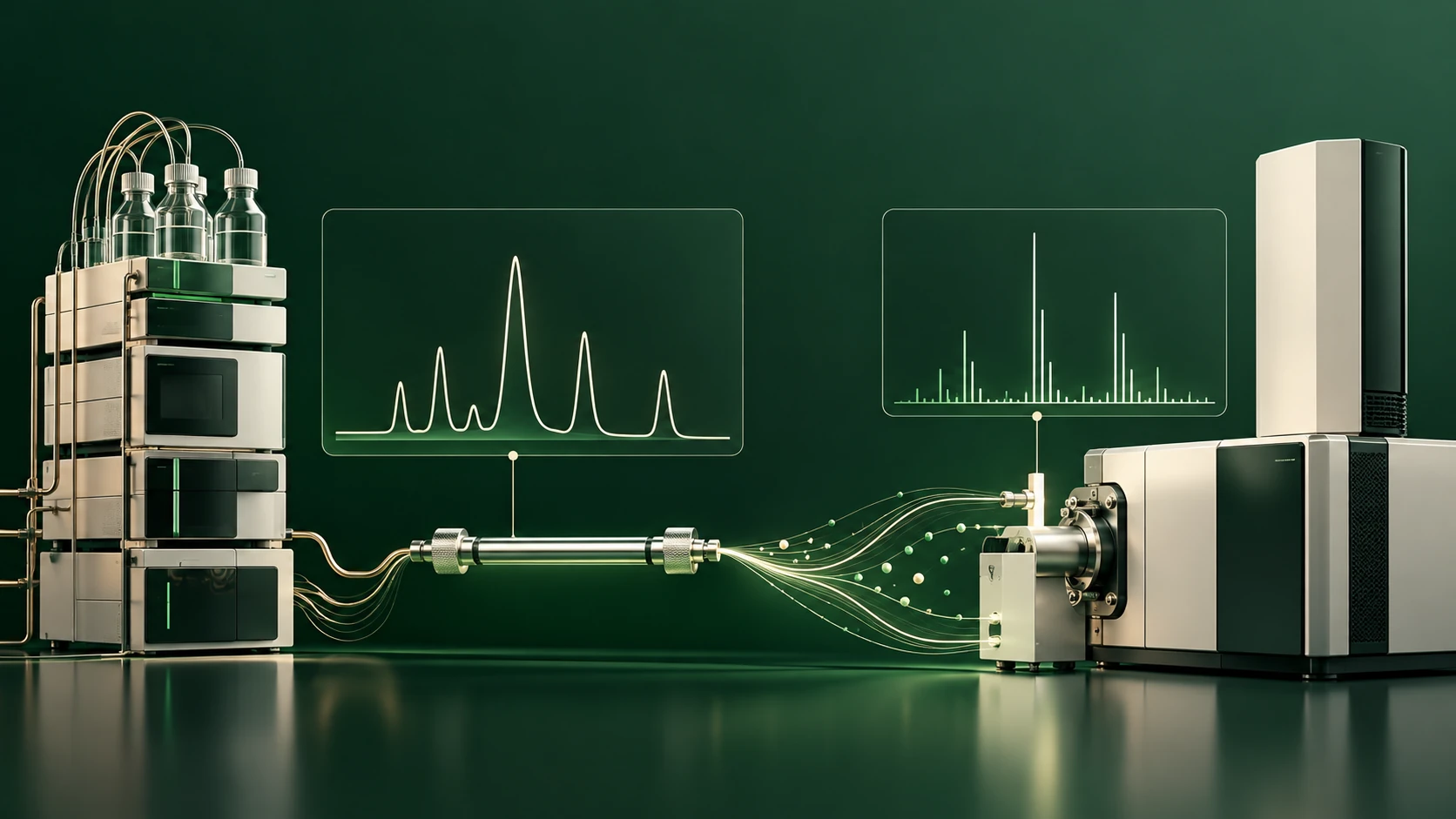
HPLC separates components; LC-MS adds mass-based detection. Learn how the results work together and why purity, identity and quantity need different evidence.
Peptide Science
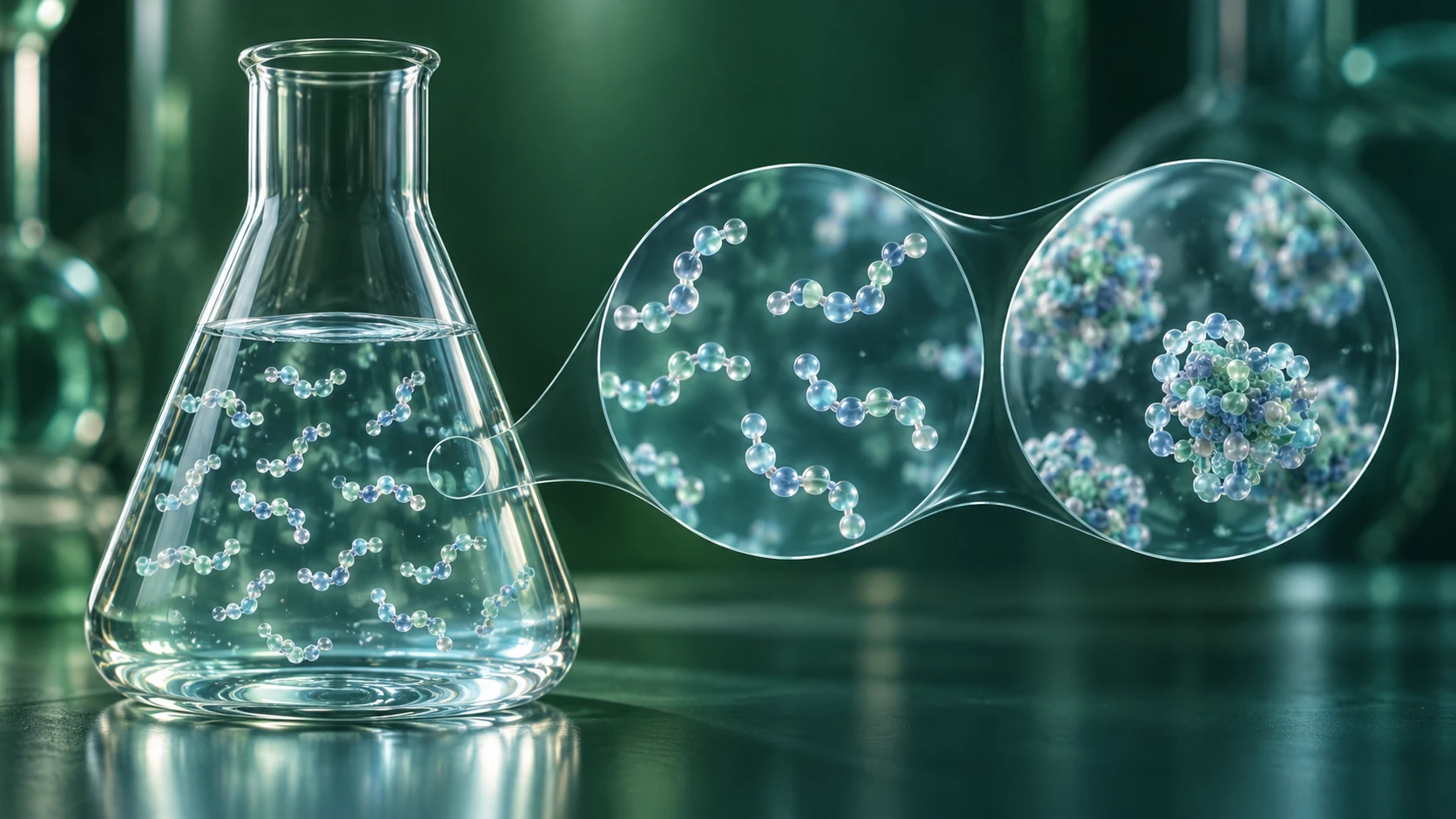
Explore why peptide sequence and laboratory conditions influence solubility, and how dissolution differs from dispersion, aggregation and precipitation.
Peptide Science
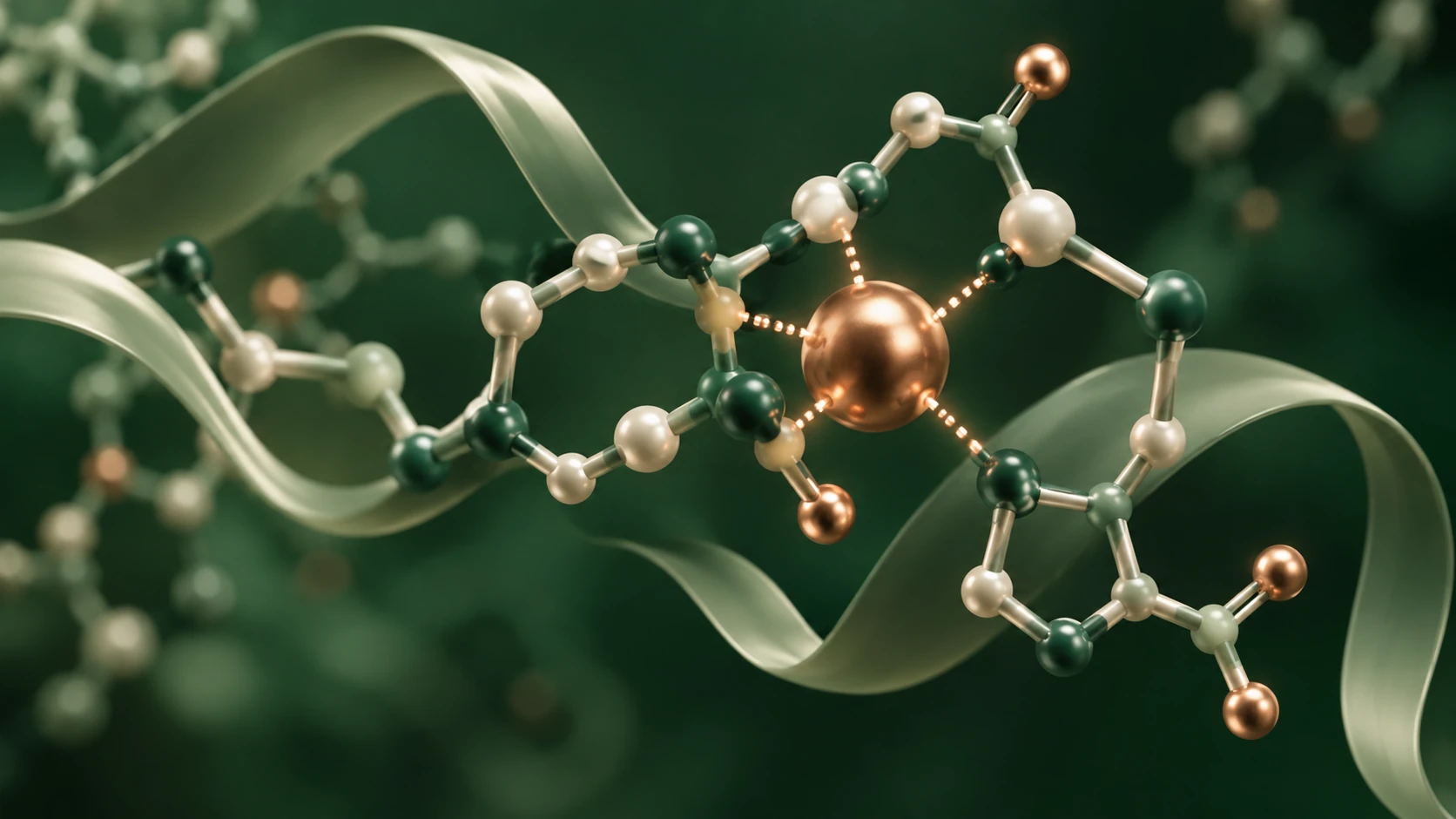
Learn how GHK binds copper and why molecular chemistry, cell experiments, animal models and human studies answer different questions about GHK-Cu.
Peptide Science
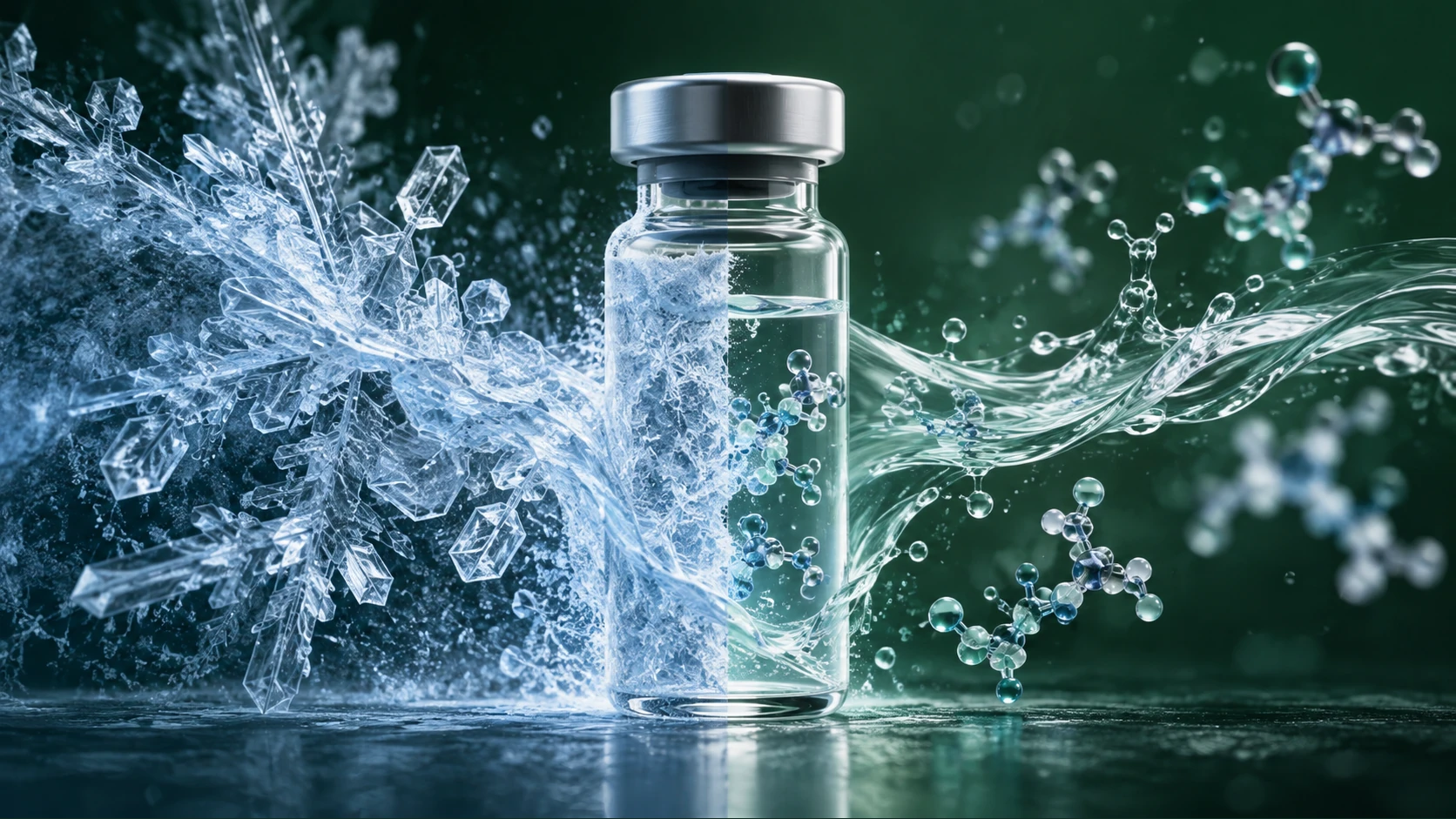
Learn how ice formation changes the local sample environment, how physical loss differs from chemical degradation, and what a useful stability experiment measures.
Analytical Testing
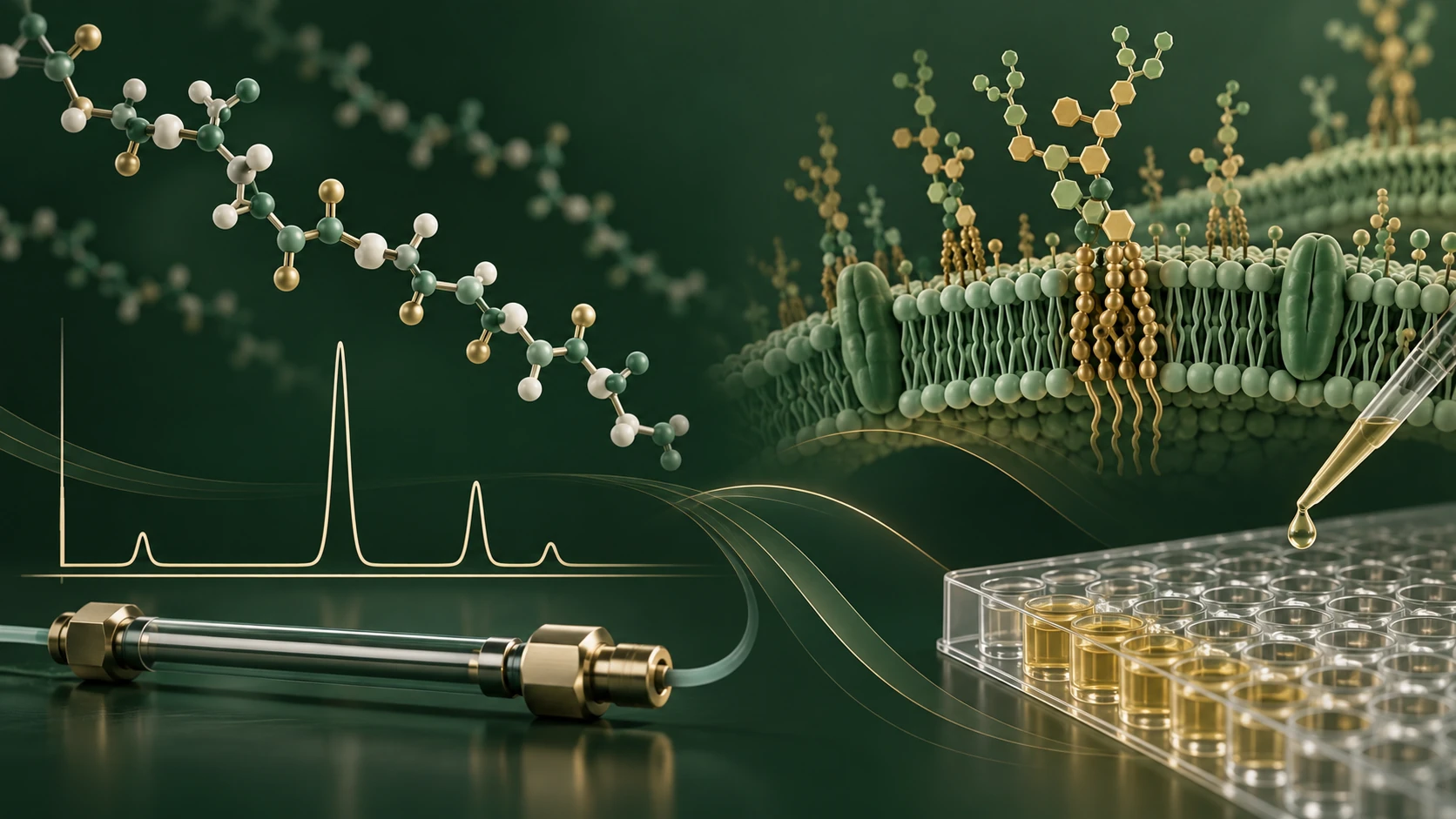
Separate chromatographic purity from endotoxin and microbiological results, understand assay interference, and recognise what a report leaves untested.
Peptide Science
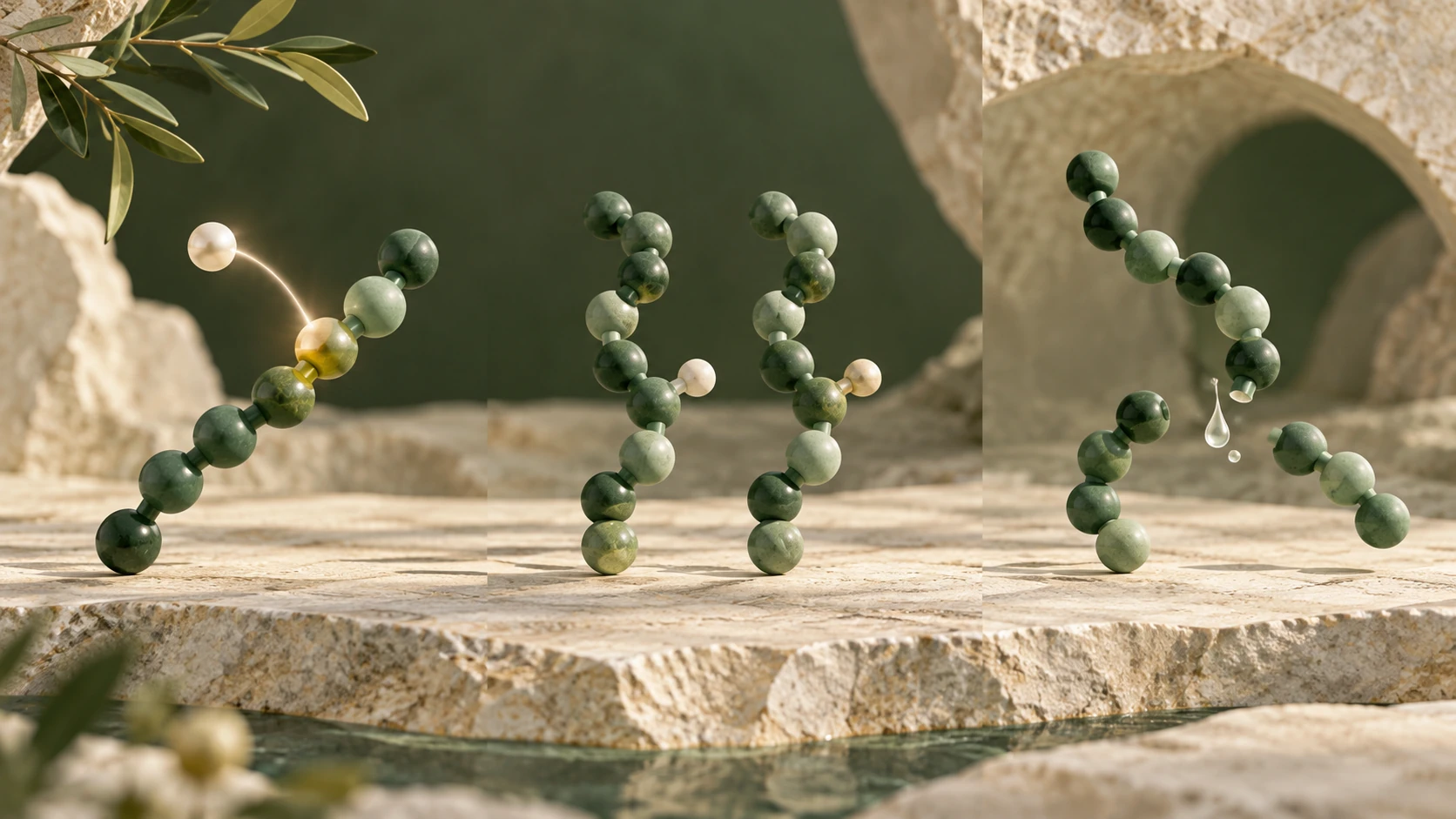
Explore oxidation, deamidation and peptide-bond hydrolysis, with clear examples of sequence-dependent chemistry and the analytical evidence needed to identify changes.
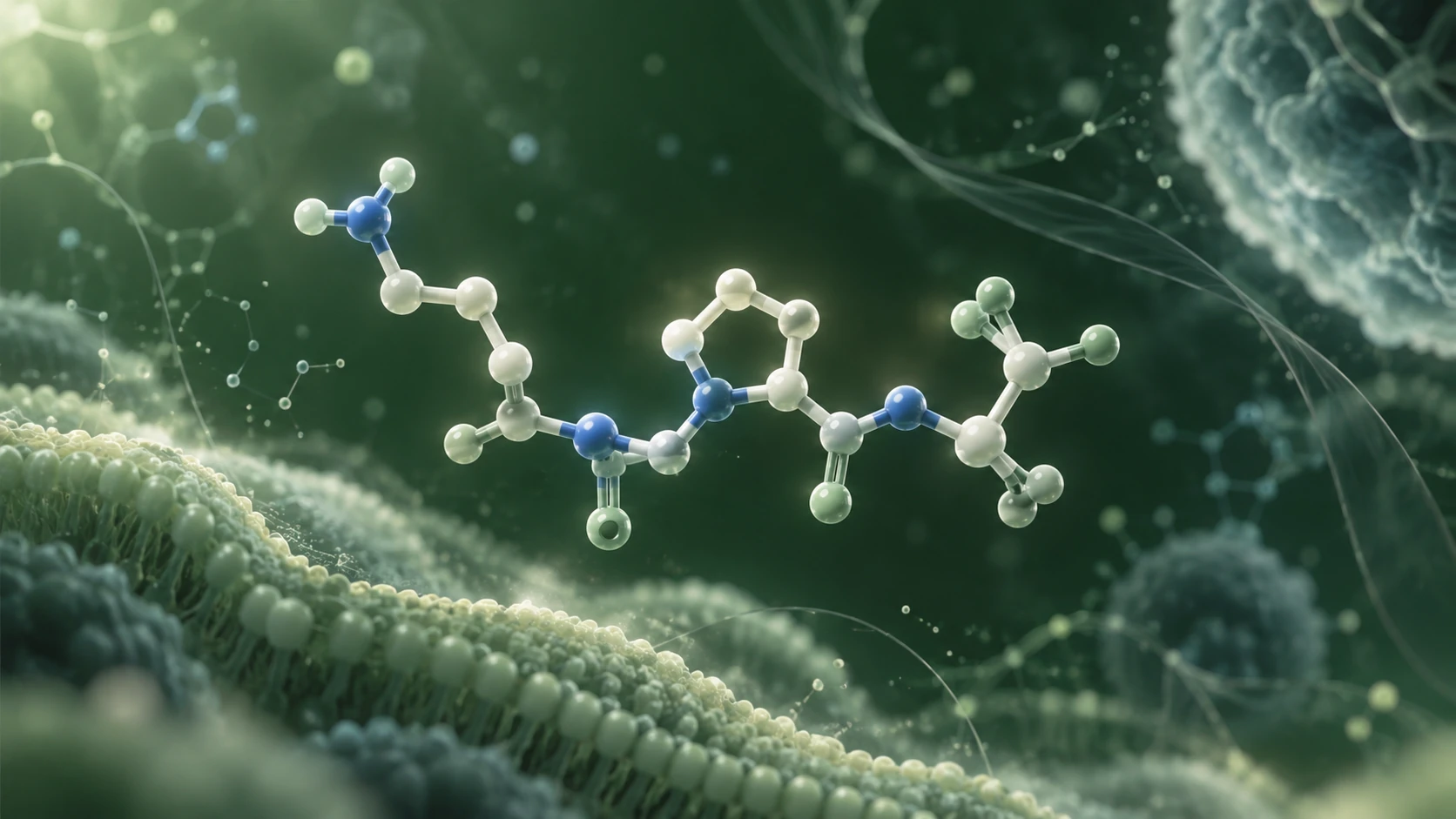
Peptide Science
Read the Lys-Pro-Val sequence, examine transport and inflammatory-signalling experiments, and separate preclinical findings from clinical evidence.
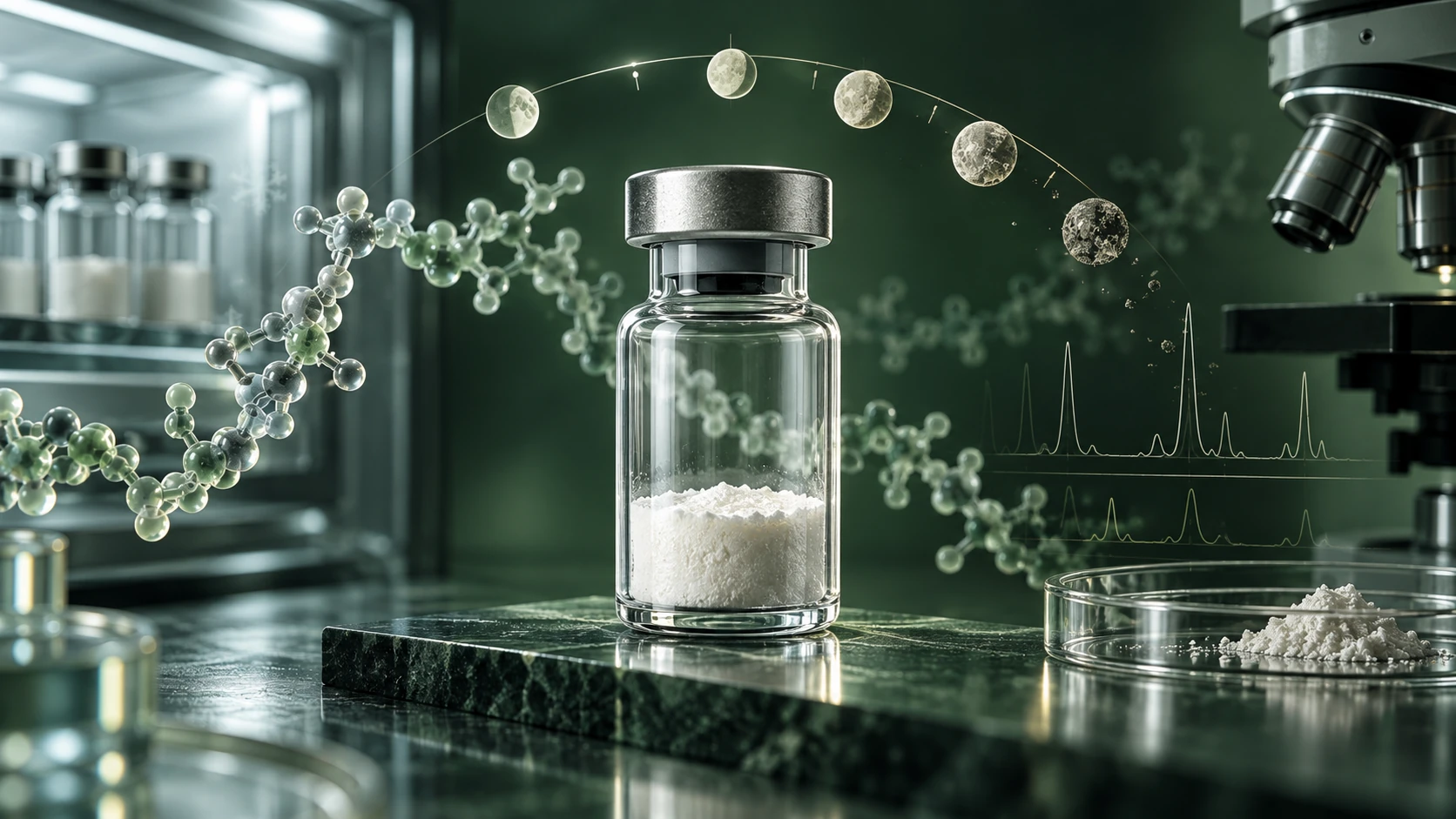
Documentation
Understand expiry and retest terminology, dry versus solution stability, and the evidence needed to interpret a date or an older analytical report.
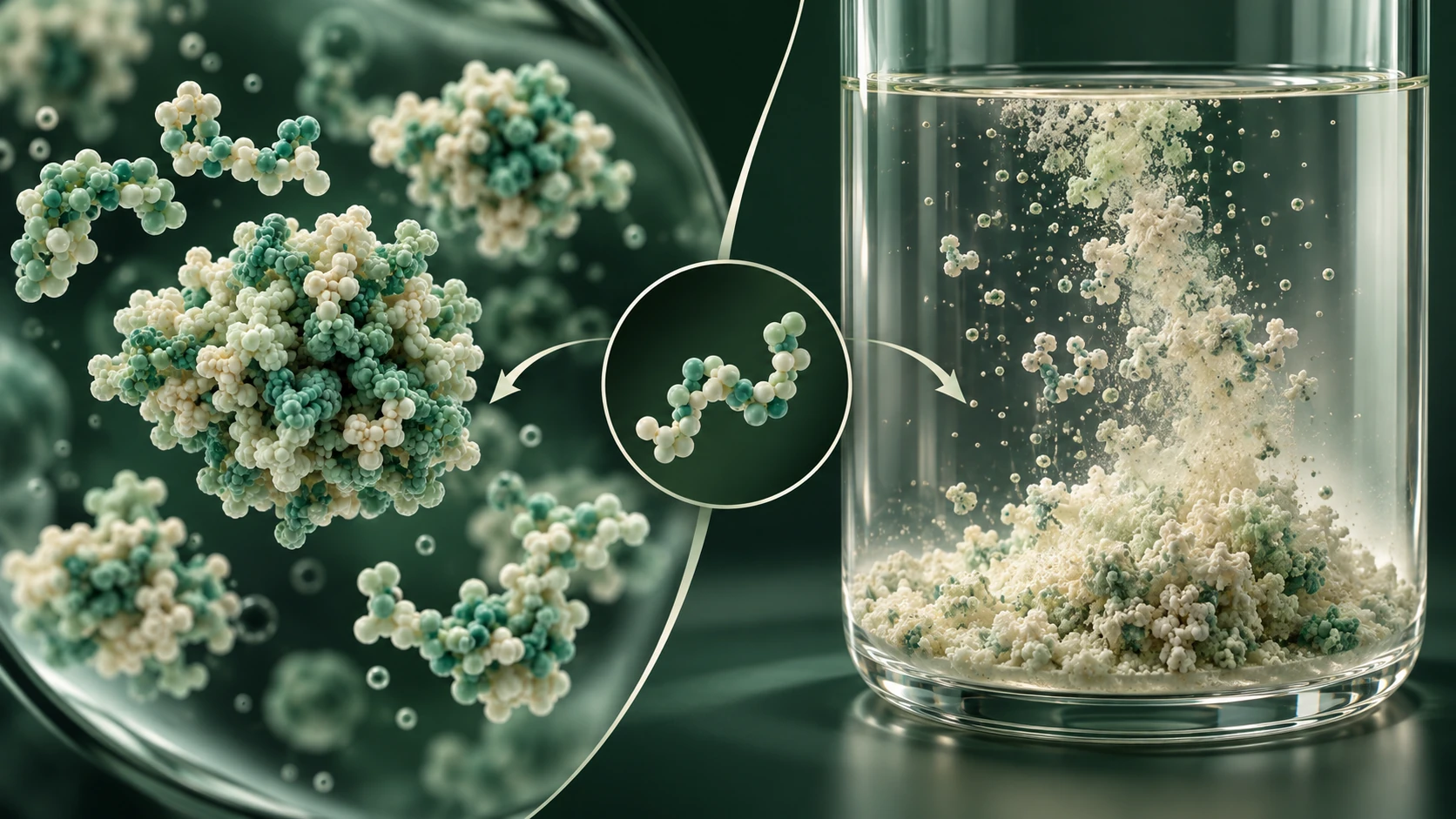
Peptide Science
Distinguish molecular association from solid-phase separation, explore sequence and solution effects, and interpret visible changes alongside analytical evidence.
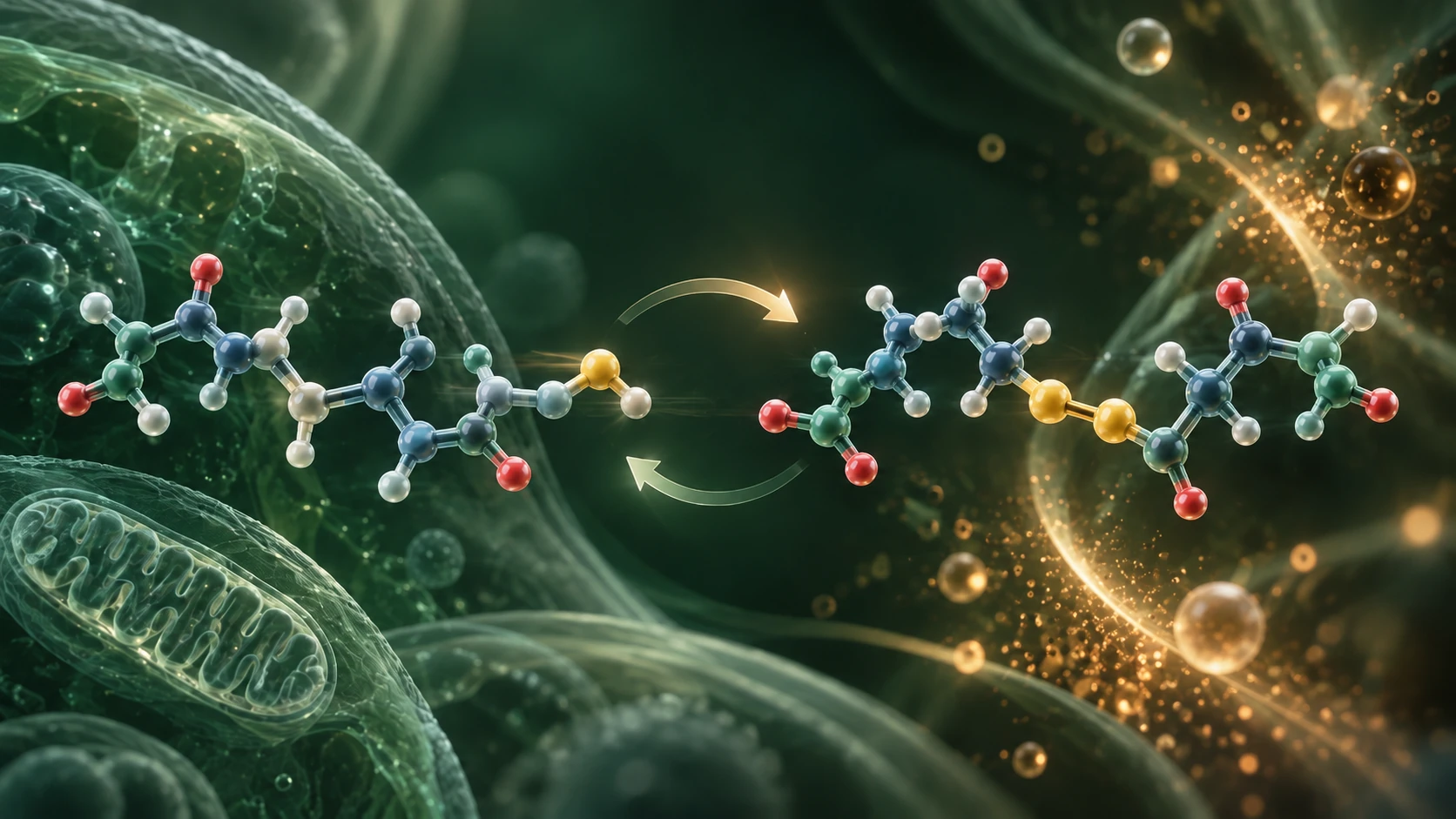
Peptide Science
Understand glutathione’s unusual peptide linkage, the GSH/GSSG distinction and how laboratories investigate redox chemistry without overstating human outcomes.
Peptide Science
Explore tesamorelin’s structure and GHRH signalling, and learn how to interpret endocrine measurements and clinical findings within their studied context.
No guides match your search. Try another topic or category.