
On this page
What is tesamorelin?
Tesamorelin is a synthetic peptide analogue of human growth hormone-releasing hormone, abbreviated GHRH and also called growth hormone-releasing factor, GRF. GHRH participates in regulation of growth hormone secretion. Tesamorelin is investigated in relation to that pathway, but it is not growth hormone itself.
Three questions should be kept separate: which molecule is present, what it does in a specified biological system, and what outcomes a defined intervention produces in people. A sequence description addresses the first question. Receptor experiments and endocrine measurements address parts of the second. Clinical trials need appropriate participants, comparators and endpoints to address the third.
This distinction is especially important when research appears on a supplier’s website. Findings for a study formulation cannot establish the quality, safety or effects of a separately supplied research material. This Guide explains the literature and its limits. It supplies no dosing, preparation or personal-use advice, and contains no product-page navigation.
Structure and peptide class
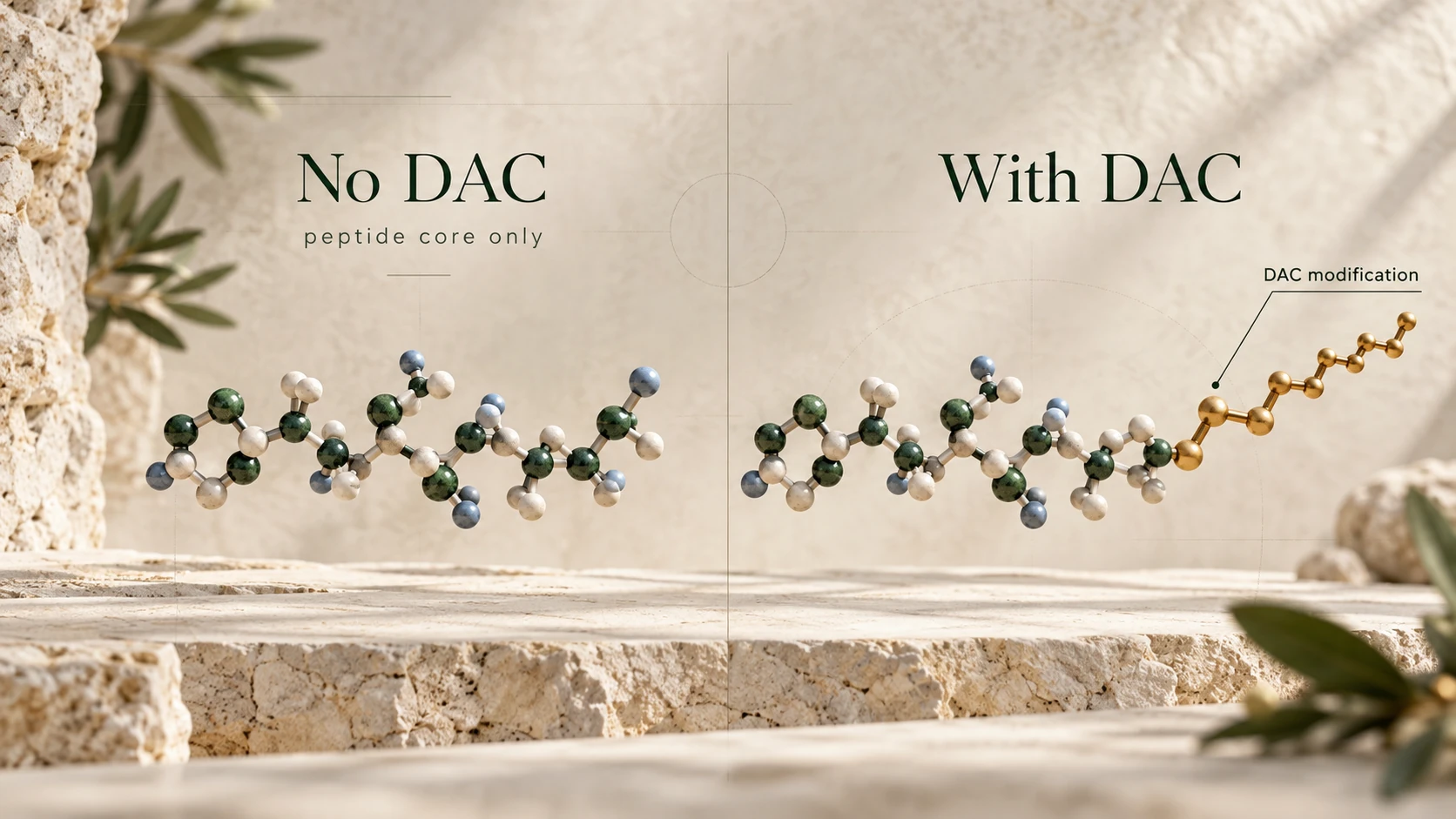
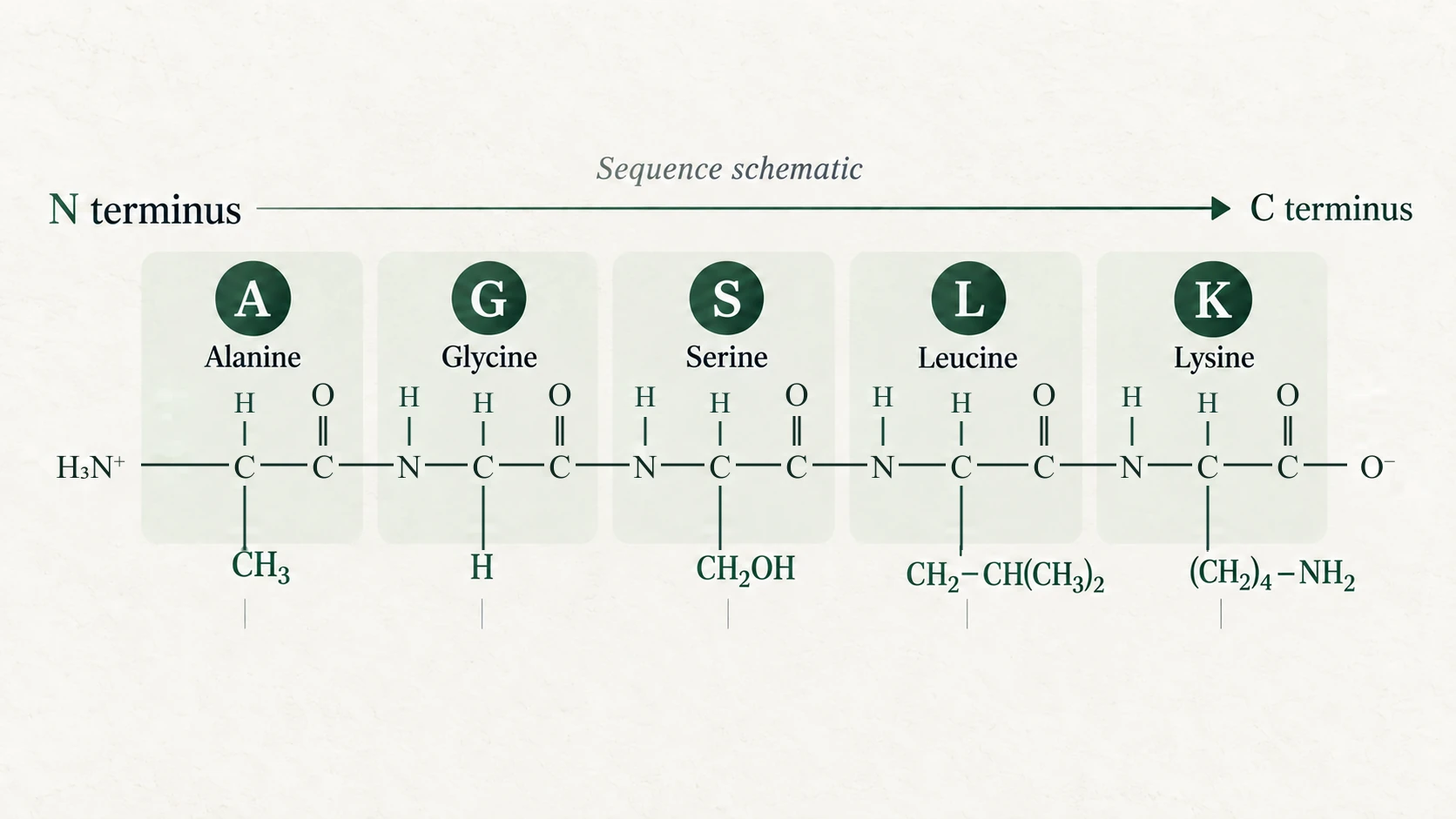
The molecular description of tesamorelin uses the 44-residue human GHRH sequence with an N-terminal hexenoyl modification. The chain has a C-terminal amide. The FDA’s 2025 EGRIFTA WR description, section 11 specifies the sequence and terminal modification for that medicinal formulation.
A terminal chemical group is part of the molecular identity, not another amino-acid residue. Likewise, a salt or counterion describes an additional aspect of the supplied material rather than extending the peptide sequence. The Peptide Sequence Guide explains these distinctions.
Calling tesamorelin a GHRH analogue indicates a relationship to the endogenous hormone. It does not mean all analogues in this family have identical structures or behaviour. Sequence length, substitutions and attached groups must be specified when comparing materials. The CJC-1295 comparison discusses a different set of GHRH-related structures and should not be used as substitute evidence for tesamorelin.
The description of an authorised medicine also does not verify a research vial. Formulation ingredients, manufacturing controls and batch testing are distinct from a literature identity. An appropriate report must describe the actual sample examined.
GHRH signalling: receptor activation comes first
GHRH acts through its receptor, GHRHR, including on growth hormone-producing cells in the anterior pituitary. The receptor belongs to the G protein-coupled receptor family. Activation connects an extracellular peptide signal to intracellular processes that help regulate hormone synthesis and release.
A structural study of the human GHRH receptor examined the endogenous ligand bound to the receptor and stimulatory G protein. This is direct evidence about that molecular complex. It is not a crystal or cryo-EM validation of every tesamorelin preparation or proof of a human outcome.
G protein coupling can engage cyclic AMP signalling. A receptor-binding measurement and a downstream cellular response are different observations. Experimental receptor abundance, cell background and the chosen readout can affect how an analogue appears to behave. A potency value belongs to its assay conditions, rather than being a universal score.
Researchers can investigate specificity with comparison ligands, receptor controls and complementary readouts. Even a well-controlled cellular result remains a bounded mechanism finding. Exposure, metabolism, feedback and responses across tissues are additional questions in a living system.
Growth hormone and IGF-1 are downstream questions
Growth hormone, GH, is released by the pituitary in a regulated pattern. It acts through the growth hormone receptor, a different receptor from GHRHR. The review Classical and novel GH receptor signaling pathways describes signalling through the GH receptor, including JAK2-associated pathways. Confusing these receptors collapses two distinct stages of the biological process.
GH can influence production of insulin-like growth factor 1, IGF-1, and other tissue responses. An IGF-1 measurement is therefore relevant to endocrine research, but is not interchangeable with a direct receptor assay or a complete description of GH secretion. The pathway contains regulation and feedback, not a simple unvarying chain of effects.
Sampling matters. GH concentrations change over time, so one blood measurement may miss much of the secretion pattern. Repeated sampling and suitable models help researchers examine pulse characteristics. The Peptides vs Proteins Guide provides broader molecular context without treating chain size as a predictor of biological outcome.
A change in GH or IGF-1 is an endocrine observation. It does not alone establish a desirable body-composition result, improved health, or safety. Those conclusions need evidence directed at the relevant endpoint and population.
What a small human signalling study can show
Stanley and colleagues examined endogenous GH pulsatility in thirteen men using a short-term tesamorelin intervention and frequent overnight sampling. They reported changes in mean overnight GH, pulse-related measurements and IGF-1. The work connects an intervention to measured endocrine responses in that study setting.
Its size and duration matter. It cannot estimate uncommon harms or establish long-term outcomes. Findings in a small group of men cannot automatically represent women, children, other age groups or people with different endocrine conditions. The study’s insulin-sensitivity measurements should also be read within their short observation period.
The methods illustrate why “stimulates GH” is an incomplete summary. Basal secretion, pulse area and pulse frequency are distinct parameters, and a study need not find the same change in each. Looking at the actual endpoints is more useful than inferring a complete physiological pattern from the molecule’s class.
This paper is not evidence about a Lynx batch. Nor does it provide a personal-use protocol. A short mechanistic investigation can guide further research while leaving clinical usefulness and long-term safety unresolved.
Clinical findings belong to a defined population
Much of tesamorelin’s clinical evidence concerns adults with HIV-associated excess abdominal fat in the context of antiretroviral treatment. Falutz and colleagues’ randomised placebo-controlled trial examined visceral adipose tissue using imaging, alongside specified secondary measurements. It reported a reduction in the visceral-fat endpoint relative to placebo.
Visceral adipose tissue is the fat compartment within the abdomen. It is not synonymous with body weight, all abdominal fat or a photographic appearance. A change in an imaging endpoint should not be rewritten as a general weight-loss result. The trial population and its clinical context are also integral to interpretation.
A further randomised trial with an extension phase investigated continued intervention and withdrawal. It reported that initial changes were lost after switching to placebo. This supports examining persistence under the study design, rather than assuming an observed change is permanent.
A later randomised trial studied liver fat in people with HIV and fatty liver disease. That is a separate organ-specific question, not automatic proof of a general treatment for every person with altered liver measurements. Each trial contributes evidence for its own endpoints and selection criteria.
These findings must not become retail promises. They do not show that a research vial is equivalent to the studied formulation, clinically appropriate or effective for an unrelated use.
Safety and regulatory context are part of the evidence
Positive endpoint findings do not erase safety questions. The FDA medicinal label identifies concerns including elevated IGF-1, glucose intolerance, fluid retention and hypersensitivity. It also distinguishes the authorised clinical indication from weight-loss management. These are features of the regulated medicine’s evidence and conditions of use, not instructions for using a research material.
The EMA records withdrawal of the Egrifta application in 2012. Its account describes unresolved benefit-risk concerns, including IGF-1 and long-term safety evidence. That historical decision should not be confused with US authorisation or treated as a current UK licensing determination.
Regulatory conclusions are jurisdiction- and product-specific. An authorised formulation is assessed as a package of composition, manufacture, evidence and clinical conditions. Merely sharing an active-substance name does not transfer that status to a supplier’s research material.
This article retains human evidence because it is relevant to understanding the compound. It does not present that evidence as clearance for catalogue promotion or suitability for personal use. Independent assessment of a commercial claim must consider its complete context, not just an educational disclaimer.
Chemical evidence is separate from biological evidence
A structural description tells a laboratory what identity it is trying to assess. Chromatographic profiling can examine separated components, and mass spectrometry can support a proposed mass or investigate suitable fragments. Neither an attractive label nor a receptor result confirms the contents of another sample.
The HPLC vs LC-MS Guide explains why those methods answer complementary questions. The Mass Spectrometry Guide covers mass and identity limits, while Amino Acid Analysis addresses a different measurement basis. A purity percentage is not a measured amount of peptide and does not establish clinical suitability.
Sample identity, method purpose and reporting scope should be traceable through the document. The COA-reading Guide offers a framework for checking them. A report for one batch cannot establish a result for another, and published human research cannot supply missing analytical data.
Conversely, a chemical report does not recreate a trial’s clinical assessment. Molecular identity, formulation quality and outcomes in people are related questions with different evidence requirements. Keeping them separate improves interpretation without denying any well-supported finding.
How to read a tesamorelin research claim
Begin with the question the study actually asked. A molecular structure, a hormone change and an imaging outcome sit at different levels of evidence. Moving between them requires supporting observations rather than an assumed chain of benefit.
- Identify the exact analogue and formulation.
- Separate receptor binding, signalling and endocrine measurements.
- Check participant selection, comparator and observation period.
- Read the primary endpoint before interpreting secondary findings.
- Keep imaging compartments distinct from weight or overall health.
- Include adverse events, withdrawals and unresolved safety questions.
- Distinguish clinical-study material from independently supplied samples.
A restrained conclusion describes what changed, in whom, under which conditions, and what remains unknown. It avoids broad “best for” comparisons with other peptides and does not transform a defined clinical finding into a consumer recommendation.
Lynx materials are for laboratory research only, not for human or veterinary use, diagnosis or treatment. This article provides no dosing, administration or personal-use preparation instructions.
References and study scope
- FDA. EGRIFTA WR prescribing information, 2025. Sections 1, 5, 11 and 12: medicinal product description and context, not Lynx evidence.
- Structural basis for activation of the growth hormone-releasing hormone receptor. Nature Communications, 2020. DOI: 10.1038/s41467-020-18945-0. Endogenous GHRH complex.
- Classical and novel GH receptor signaling pathways. 2020. GH receptor context, distinct from GHRHR.
- Stanley TL et al. Effects of a growth hormone-releasing hormone analog on endogenous GH pulsatility and insulin sensitivity in healthy men. 2011. DOI: 10.1210/jc.2010-1587. Short-term mechanistic study.
- Falutz J et al. Metabolic effects of a growth hormone-releasing factor in patients with HIV. 2007. DOI: 10.1056/NEJMoa072375. Defined randomised clinical study.
- Falutz J et al. Effects of tesamorelin, a growth hormone-releasing factor, in HIV-infected patients with abdominal fat accumulation: a randomized placebo-controlled trial with a safety extension. 2010.
- Stanley TL et al. Effects of tesamorelin on non-alcoholic fatty liver disease in HIV: a randomised, double-blind, multicentre trial. 2019. DOI: 10.1016/S2352-3018(19)30338-8.
- EMA. Egrifta: withdrawal of marketing-authorisation application, 2012. Historical jurisdiction-specific assessment.