On this page
What is peptide degradation?
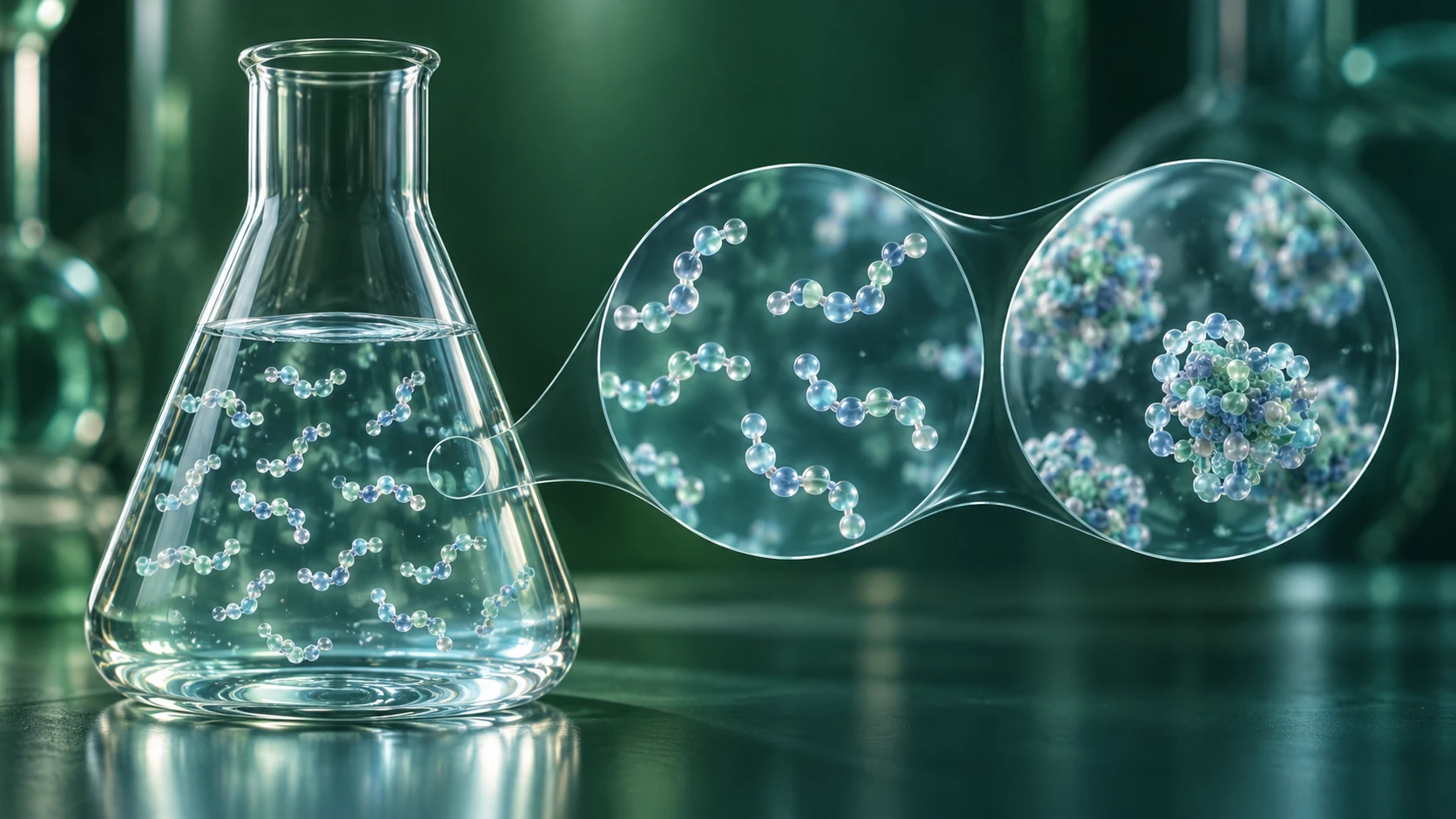
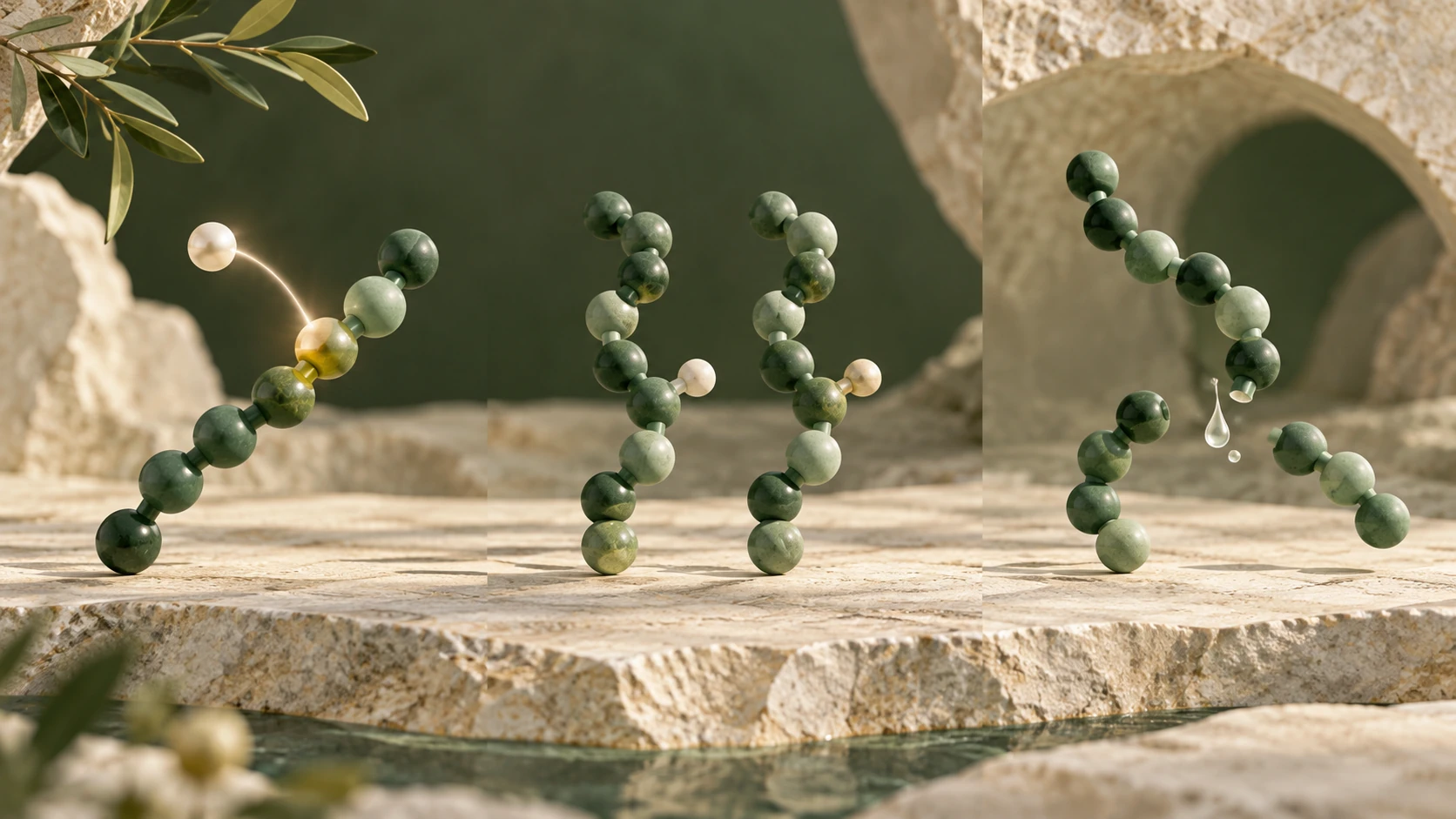
Chemical degradation changes a peptide’s covalent structure: the connections between its atoms or the chemical groups attached to its residues. Oxidation may modify a side chain, deamidation may change an amide group, and hydrolysis may split the backbone. An altered molecule can remain similar to the starting peptide while having a different composition or analytical profile.
Physical instability describes a different kind of change. Molecules may associate into aggregates, precipitate, or adsorb onto a container. These processes can reduce the amount recovered from a solution without necessarily changing the covalent structure of each molecule. Chemical and physical changes can also occur together, so the distinction is a question to investigate rather than an assumption.
This Guide extends the oxidation and deamidation introduction to backbone cleavage and the evidence needed to distinguish pathways. It explains chemistry, not a universal shelf life or a storage specification for any supplied material.
Oxidation: susceptible groups and their surroundings
Oxidation changes the electronic state of a chemical group and can produce new covalent structures. Methionine’s sulfur-containing side chain can form methionine sulfoxide. Cysteine’s thiol group can participate in disulfide formation and other oxidative modifications. Tryptophan’s aromatic side chain can also be modified under appropriate oxidative conditions. These are different reactions, not one common product called “oxidised peptide”.
Which groups react depends on the oxidant and the molecular environment. Shechter and colleagues demonstrated methionine oxidation in peptides and proteins and showed that exposure of residues influenced their reactivity. Ji and colleagues studied PTH(1–34) with different oxidants, chromatography and mass spectrometry. Different conditions affected different residues in that model.
Those experiments explain why sequence alone is incomplete evidence. Accessibility, local structure and other constituents can influence a reaction. A stress experiment deliberately challenges a material to reveal possible products. It does not establish that the same changes occur during ordinary storage. Nor does the absence of methionine rule out every oxidative pathway.
LC-MS can investigate masses associated with oxidative modification, while suitable fragmentation can help locate a changed residue. A mass difference is a clue that must fit the proposed chemistry and other observations. It is not a complete structural assignment on its own.
Glutathione: a useful example of sulfur chemistry
Glutathione is a catalogue compound that makes the distinction concrete. Reduced glutathione, GSH, is γ-glutamyl-cysteinyl-glycine: three residues with an unusual glutamate side-chain linkage. Its cysteine thiol can participate in formation of glutathione disulfide, GSSG, joining two glutathione units through sulfur. That change is not peptide-backbone hydrolysis.
A primary HPLC study of GSH and GSSG discusses auto-oxidation as a source of measurement bias. Paroni and colleagues separately measured reduced, oxidised and protein-bound glutathione fractions in biological samples. The chemical form and sample treatment therefore matter when interpreting a reported amount.
These are literature examples, not findings for Lynx glutathione batches. A generic glutathione name cannot establish the redox composition of a particular sample, and biological-sample methods do not supply a storage lifetime for a research vial.
Deamidation: side-chain change without necessarily splitting the chain
Asparagine and glutamine contain side-chain amide groups. Deamidation converts those groups towards carboxylic-acid-containing products, altering composition and potentially charge under the measurement conditions. Asparagine can yield aspartate-related products. Glutamine can yield glutamate-related products. The backbone need not be cleaved for the peptide to change chemically.
For some asparagine sequences, a cyclic succinimide intermediate provides a route to both normal aspartate and isoaspartate. In isoaspartate, the chain connects through the side-chain carboxyl position, changing the local backbone arrangement. Geiger and Clarke’s synthetic-peptide experiments showed that neighbouring residues influence these reactions. Their model sequences do not define the behaviour of every asparagine-containing peptide.
Glutamine chemistry is related but should not be treated as identical. Li, Lin and O’Connor investigated normal and γ-glutamate products in model peptides using electron capture dissociation. Their results also demonstrate why isomer assignment can require carefully interpreted fragmentation rather than intact mass alone.
Temperature, pH, sequence and conformation affect the pathway being measured. The useful question is which residue and product are supported by the experiment, not simply whether the sample is “deamidated”. Different products may share a mass while differing in connectivity.
Hydrolysis: when a peptide bond is cleaved
Hydrolysis uses water in breaking a chemical bond. Hydrolysis of an ordinary backbone peptide bond produces a carboxyl-containing end and an amino-containing end. One chain can become shorter fragments. Cleavage at different positions produces different fragment sets, so the proposed site should be consistent with the products detected rather than inferred from the disappearance of the starting material. This differs from side-chain amide hydrolysis, which can change a residue without dividing the chain.
A peptide bond is not automatically destroyed just because water is present. Radzicka and Wolfenden examined uncatalysed hydrolysis in model compounds, illustrating the kinetic resistance of ordinary peptide bonds under neutral conditions. Their measurements are not evidence that a complete research peptide remains unchanged for a comparable period: other bonds and pathways may be more susceptible.
Catalysis changes that picture. Acids, bases or enzymes can facilitate particular reactions, and local functional groups can create sequence-specific routes. Model-peptide experiments on neighbouring histidine and cysteine investigated how local residues affect competing degradation and cleavage reactions. A mechanism demonstrated for one sequence should not be assigned to another merely because both are peptides.
Fragment detection requires attention to where cleavage happened. Fragments formed in a mass spectrometer during MS/MS are analytical products. They are not automatically evidence that the stored sample had already fragmented. An investigation needs to distinguish pre-existing sample components from changes created during analysis.
Isomerisation, disulfide changes and aggregation
Isomerisation changes molecular arrangement without necessarily changing elemental composition. The normal-aspartate/isoaspartate distinction is one example. Racemisation changes stereochemical configuration and is another possibility in susceptible systems. An unchanged intact mass can therefore coexist with a chemically altered peptide.
Disulfide-containing peptides have additional questions: whether sulfur connections are retained, reduced, exchanged or modified. Hawe and colleagues studied oxytocin under accelerated conditions and identified several products using complementary techniques. Their findings illustrate multiple competing pathways in a particular peptide and formulation, not a general prediction for every cyclic peptide.
Aggregation can involve non-covalent association, covalent linking, or both. A larger apparent species needs characterisation before it is called a degradation product. The Solubility Guide explains dissolution, dispersion and precipitation. The Freeze-Thaw Guide considers changes caused by temperature cycling. Neither visible particles nor a clear solution settles the chemical identity question.
Why different peptides behave differently
Start with the exact sequence, terminal groups, bonds and material form. KPV, Lys-Pro-Val, provides a simple catalogue example: its three residues contain no methionine, cysteine, tryptophan, asparagine or glutamine. The specific side-chain pathways discussed for those residues therefore cannot simply be assigned to KPV. Dalmasso and colleagues identify that sequence. Their biological experiments are not stability tests of a Lynx sample.
That observation does not make KPV immune to degradation. Backbone reactions and other chemical changes remain separate questions. Counterions, moisture, dissolved constituents and container history can also change the experimental environment. Sequence is a way to narrow hypotheses, not a substitute for measurements.
Results should distinguish dry material from a prepared solution and record the conditions actually examined. A result for one formulation, concentration or observation period cannot automatically define another. Comparing like with like is more informative than ranking peptides as universally stable or unstable.
How laboratories investigate an altered profile
HPLC separates components according to their interactions with the chromatographic system. Additional peaks, shifted retention or changing peak areas can reveal a changed profile. They do not identify oxidation, deamidation or hydrolysis by themselves: an impurity, co-eluting component or method-related signal may offer another explanation.
LC-MS adds mass-based evidence. Suitable MS/MS experiments can examine fragments to support localisation or connectivity, but the conclusion depends on what the method can resolve. Reference materials, blanks and comparison samples strengthen assignments. The HPLC vs LC-MS Guide explains why separation and detection answer complementary questions.
Orthogonal methods add a different measurement principle. Hawe’s oxytocin investigation combined chromatographic methods, spectroscopy and mass spectrometry. Nuclear magnetic resonance or suitable electrophoretic methods can answer additional structural or charge-related questions where justified. ICH Q2(R2) discusses analytical specificity and complementary procedures. This is methodological context, not a claim of medicinal-product compliance.
Reading a degradation claim against the evidence
A credible interpretation connects the proposed starting molecule, experimental history and observed products. Keep a possible mechanism distinct from an assigned structure, and both distinct from a validated stability conclusion.
- Confirm the sequence, modifications and sample identity.
- Record formulation, exposure conditions, sampling and observation time.
- Check how the starting material and possible products were separated and detected.
- Ask whether product assignments use mass, fragments, references or independent structural evidence.
- Consider recovery losses and changes introduced during preparation or analysis.
- Keep unresolved identities and untested conditions visible.
The time of sampling matters too. An initial sample provides a comparison point, while later measurements describe a trajectory rather than a single snapshot. If recovery changes, laboratories need to consider how much material was sampled and whether the method detects the new species with a comparable response. A lower starting-peptide peak is not automatically a complete mass balance. Documenting missing or unresolved components is more informative than naming a mechanism from the direction of a change.
An accelerated study can reveal vulnerabilities worth investigating. Converting it into a shelf-life claim needs an appropriate model and supporting data under relevant conditions. No universal half-life, purity result or batch-specific stability finding follows from the examples here. Lynx materials are for laboratory research only, not for human or veterinary use, diagnosis or treatment. This Guide provides no dosing or personal-use preparation instructions.
References and study scope
- Shechter Y, Burstein Y and Patchornik A. Selective oxidation of methionine residues in proteins. Biochemistry, 1975. DOI: 10.1021/bi00691a025. Peptide/protein oxidation experiments.
- Ji JA et al. Methionine, tryptophan, and histidine oxidation in a model protein, PTH: mechanisms and stabilization. Journal of Pharmaceutical Sciences, 2009. DOI: 10.1002/jps.21746. PTH model and selected oxidants.
- Nuhu F et al. Measurement of Glutathione as a Tool for Oxidative Stress Studies by High Performance Liquid Chromatography. Molecules, 2020. Analytical method and auto-oxidation bias.
- Paroni R et al. HPLC with o-phthalaldehyde precolumn derivatization to measure total, oxidized, and protein-bound glutathione in blood, plasma, and tissue. Clinical Chemistry, 1995. Biological-sample analysis.
- Geiger T and Clarke S. Deamidation, isomerization, and racemization at asparaginyl and aspartyl residues in peptides. Journal of Biological Chemistry, 1987. Synthetic model-peptide chemistry.
- Li X, Lin C and O’Connor PB. Glutamine deamidation: differentiation of glutamic acid and gamma-glutamic acid in peptides by electron capture dissociation. Analytical Chemistry, 2010. DOI: 10.1021/ac9028467.
- Radzicka A and Wolfenden R. Rates of Uncatalyzed Peptide Bond Hydrolysis in Neutral Solution and the Transition State Affinities of Proteases. Journal of the American Chemical Society, 1996. DOI: 10.1021/ja954077c. Model-compound kinetics.
- Brennan TV and Clarke S. Effect of adjacent histidine and cysteine residues on the spontaneous degradation of asparaginyl- and aspartyl-containing peptides. International Journal of Peptide and Protein Research, 1995. Local-sequence effects in model peptides.
- Hawe A et al. Towards heat-stable oxytocin formulations: analysis of degradation kinetics and identification of degradation products. Pharmaceutical Research, 2009. DOI: 10.1007/s11095-009-9878-2. Accelerated formulation study.
- Dalmasso G et al. PepT1-mediated tripeptide KPV uptake reduces intestinal inflammation. Gastroenterology, 2008. Cited only to identify KPV, not as stability or human-treatment evidence.
- ICH. Q2(R2): Validation of Analytical Procedures, 2023. Analytical validation principles, not Lynx batch evidence.