On this page
GHK and GHK-Cu describe different chemical forms
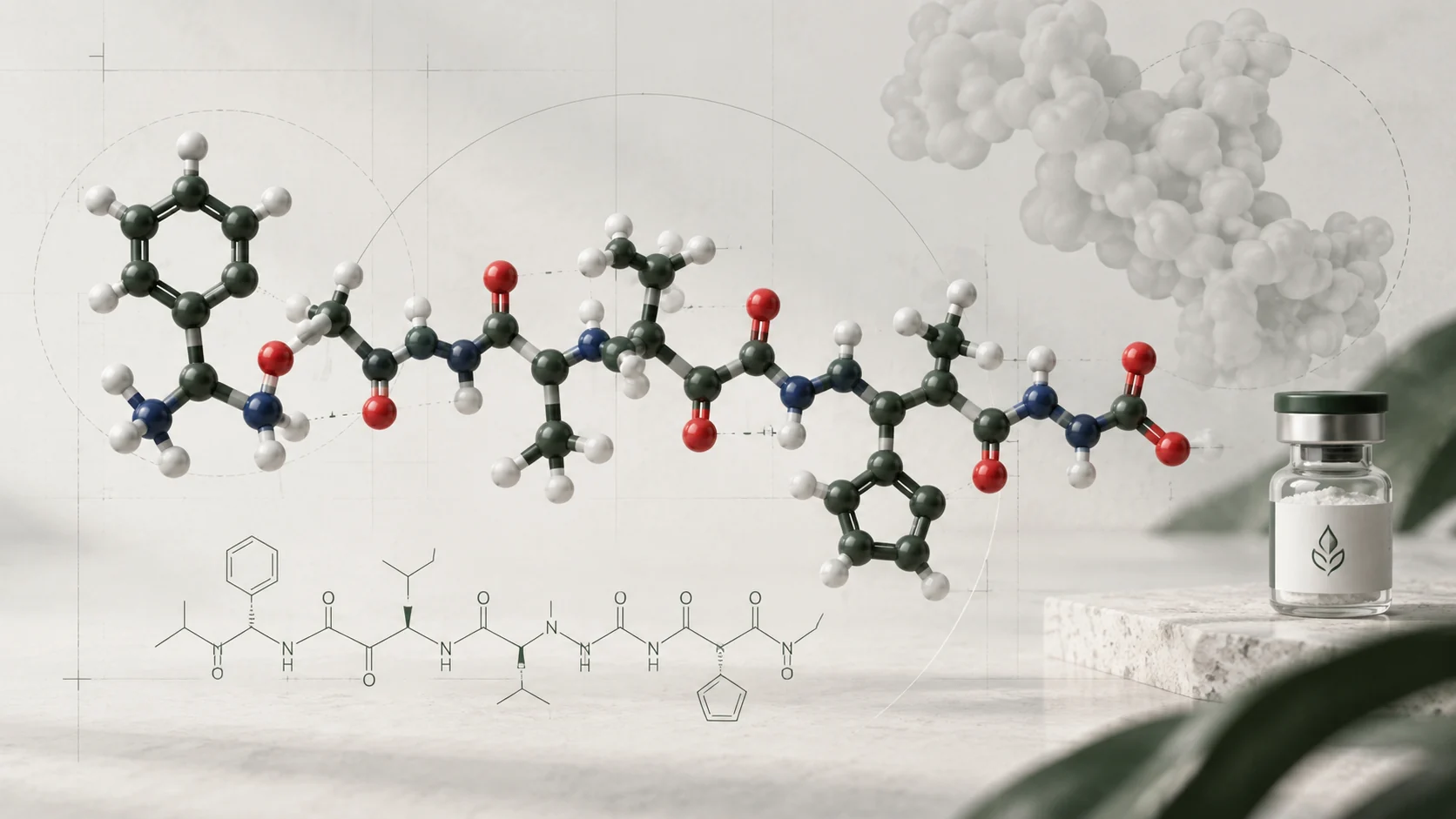
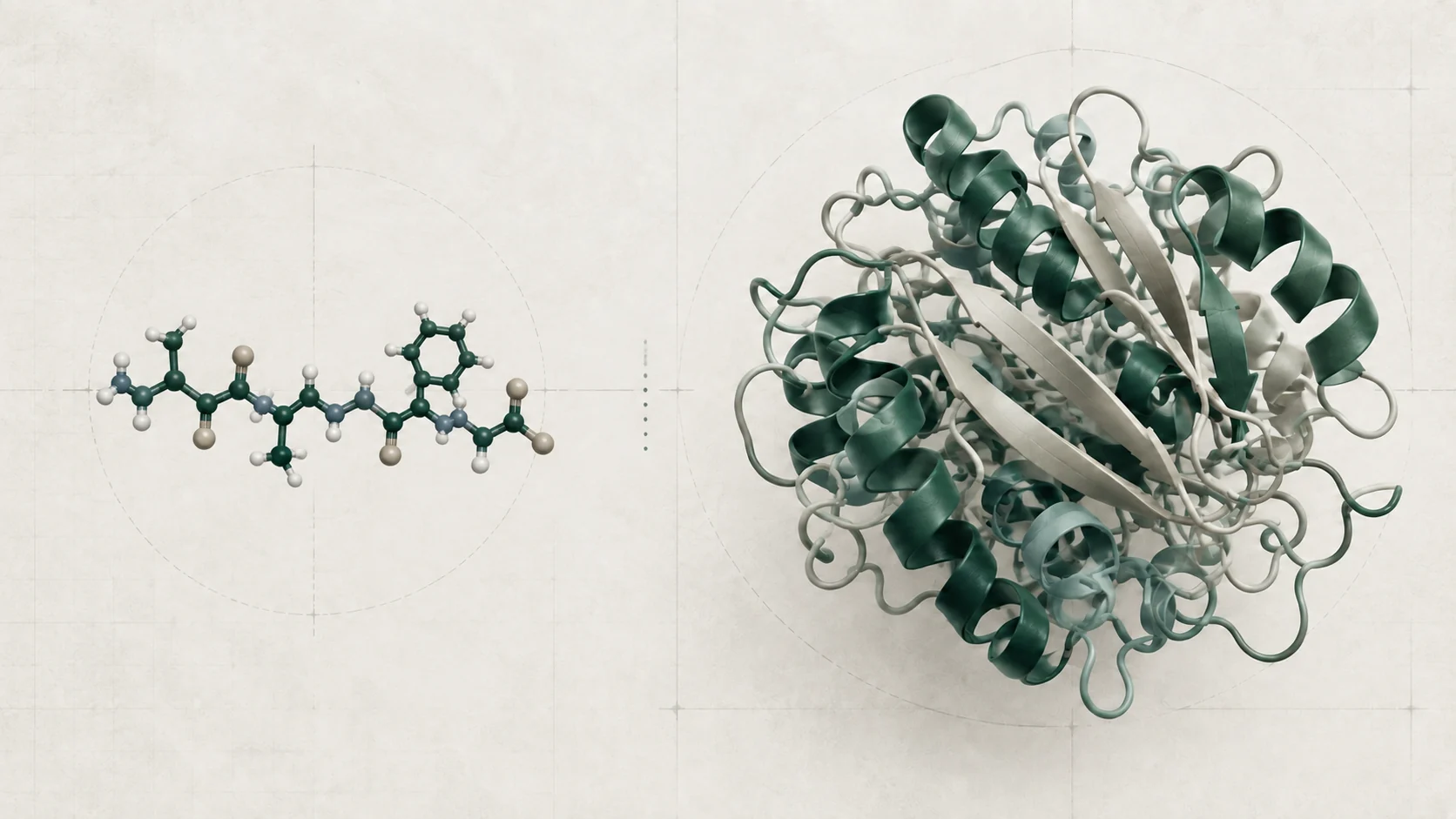
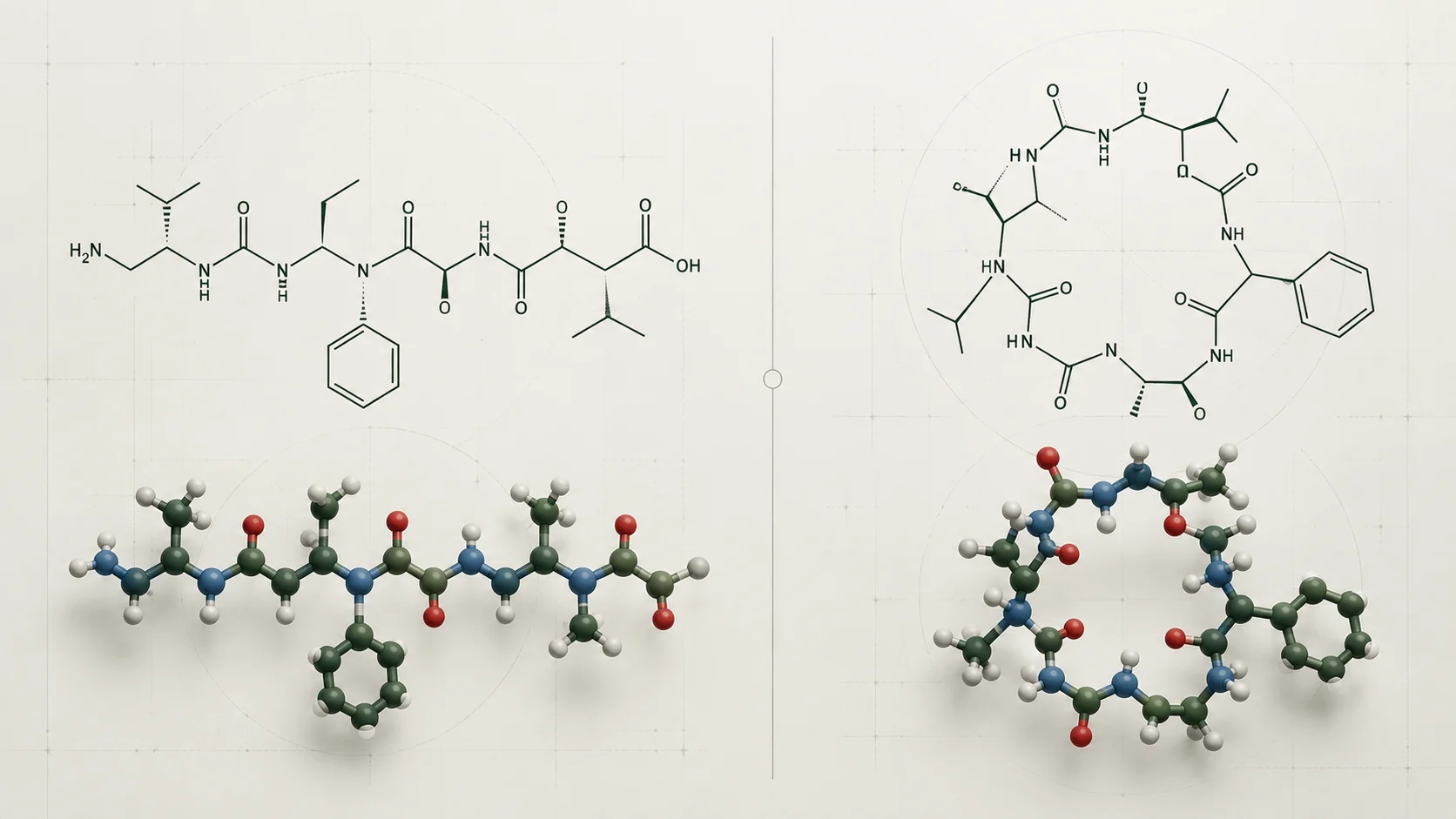
GHK is glycyl-L-histidyl-L-lysine: glycine, histidine and lysine joined in that order. It is a tripeptide, meaning it has three amino-acid residues. GHK-Cu refers to its copper complex, commonly discussed with copper in the +2 oxidation state, written Cu(II).
The sequence and metal association are separate features. Copper-free GHK, the copper complex and free copper ions should not be treated as the same experimental material. A study needs to say which was used and how it was characterised.
Conato and colleagues examined copper-complex formation using several chemical and spectroscopic methods. Their work also compared related peptides, making it useful for understanding how molecular features affect complex formation.
How copper coordination works
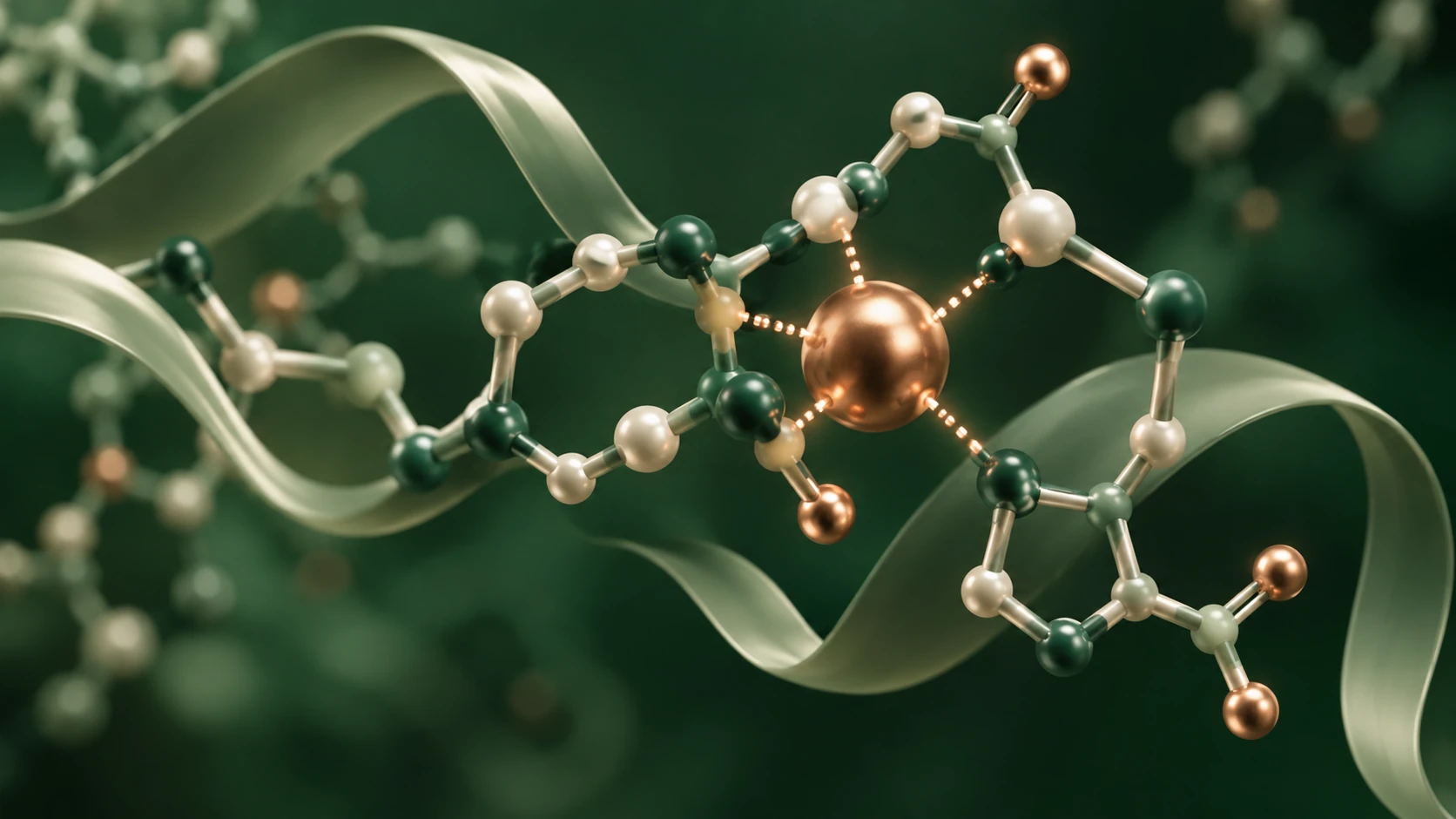
A ligand is a molecule or group that binds a metal through donor atoms. In GHK, nitrogen donor sites can coordinate Cu(II). These include the N-terminal amino nitrogen, a peptide-bond nitrogen after deprotonation, and a nitrogen in histidine’s imidazole ring.
Coordination describes the local arrangement of donor atoms around the metal. It does not mean copper replaces an amino-acid residue or extends the peptide backbone. A crystallographic study using GHK-tagged proteins illustrates these nitrogen contacts and additional coordination from the surrounding crystal environment.
A crystal structure is a defined structural observation, not a guarantee of one unchanging arrangement in every solution. pH, competing ligands and the relative amounts of peptide and copper influence the species present. Conato’s solution-chemistry study found multiple complex forms under its experimental conditions.
For research, this makes the medium part of the molecular description. A nominal GHK-Cu label or a colour observation alone cannot establish the full coordination state of a sample.
Cell studies examine matrix production and turnover
Fibroblasts are cells involved in producing and maintaining connective tissue. Their surroundings include an extracellular matrix: a framework containing collagen and other macromolecules.
Maquart and colleagues reported increased collagen synthesis in fibroblast cultures exposed to GHK-Cu. That is a cellular observation. It does not measure a clinical outcome or establish the performance of a supplied research batch.
Matrix biology also involves turnover. Matrix metalloproteinases, or MMPs, are enzymes that can break down matrix components. Tissue inhibitors of metalloproteinases, or TIMPs, regulate them. Siméon and colleagues examined MMP-2 and TIMPs in dermal fibroblast cultures.
In that experiment, copper ions reproduced the MMP-2 response, while copper-free GHK did not. This comparison matters: it helps separate contributions from the metal and peptide instead of attributing every observation to the complete complex. Changes in an enzyme, its messenger RNA and its inhibitors are distinct measurements, not a single “repair” result.
Animal models add tissue context
Maquart and colleagues used a rat wound-chamber model to study connective-tissue accumulation. They measured matrix constituents and associated molecular responses in an artificial wound environment.
Such a model adds interactions between cells, tissue and the local experimental setting that a culture dish cannot reproduce. It still differs from an ordinary human wound and from other delivery systems. The study supports a result in its own model, not a general treatment claim.
When comparing preclinical papers, identify the species, model, material and endpoint before combining their conclusions. More collagen in one setting, altered enzyme expression in another and a change in wound appearance are not equivalent observations.
What the human evidence can tell us
Human findings need to be read separately from the laboratory studies. Miller and colleagues studied skin-care regimens with or without GHK-Cu after a defined laser-resurfacing procedure. Thirteen participants completed the trial.
Computer analysis and blinded assessment found no significant between-group difference in redness resolution, wrinkles or overall skin quality. Participants’ own assessments of overall skin quality favoured the GHK-Cu regimen. The distinction between objective and self-reported outcomes is central to interpreting the result.
This small topical study is limited evidence in a specific setting. It cannot establish broad clinical efficacy, systemic safety or equivalence to an independently supplied research material. Nor does a non-significant result prove that every possible effect is absent. This Guide uses it as a traceable example, not an exhaustive systematic review of all human studies.
Keep chemistry and biological outcomes separate
| Evidence | Question addressed | Boundary |
|---|---|---|
| Solution chemistry and crystallography | How can GHK coordinate copper? | Species and geometry depend on the system examined |
| Fibroblast cultures | Which cellular and matrix measurements change? | Cells in culture are not a clinical efficacy trial |
| Rat wound chambers | What happens to matrix accumulation in that tissue model? | An artificial animal model is not a general human outcome |
| Small human topical study | Do assessed outcomes differ in that regimen and setting? | Limited participants, endpoints and formulation scope |
A proposed mechanism can guide an experiment without predicting its outcome. Binding affinity does not establish delivery to the relevant tissue, and a cellular response does not settle benefit or safety in people.
The questions that remain
Useful follow-up work connects chemical identity with biological exposure: which copper-associated species are present in the medium, how they change over time, and whether a measured response depends on the peptide, copper or another formulation component.
Reproducibility across laboratories, suitable controls and well-defined human outcomes matter as much as an attractive molecular explanation. Copper-free GHK findings should remain labelled as such rather than automatically becoming GHK-Cu evidence.
The GHK-Cu Research Library article provides a broader study-by-study account. This Guide supplies the chemistry-to-evidence framework. For sample documentation, use Mass Spectrometry and Analytical Testing. A peptide mass result alone is not proof of every metal-coordination feature.
Lynx materials are for laboratory research only, not for human or veterinary use. This Guide provides no dosing, administration or personal-use preparation instructions.
References and further reading
- Copper complexes of glycyl-histidyl-lysine and two of its synthetic analogues: chemical behaviour and biological activity. Conato et al.. 2001. DOI 10.1016/S0304-4165(01)00127-1. primary solution chemistry study.
- The copper(II)-binding tripeptide GHK, a valuable crystallization and phasing tag for macromolecular crystallography. 2020. DOI 10.1107/S2059798320013741. primary crystallographic study, GHK-tagged proteins.
- Stimulation of collagen synthesis in fibroblast cultures by the tripeptide-copper complex glycyl-L-histidyl-L-lysine-Cu2+. Maquart et al.. 1988. DOI 10.1016/0014-5793(88)80509-X. primary in-vitro study.
- The tripeptide-copper complex glycyl-L-histidyl-L-lysine-Cu2+ stimulates matrix metalloproteinase-2 expression by fibroblast cultures. Siméon et al.. 2000. DOI 10.1016/S0024-3205(00)00803-1. primary in-vitro study with copper/peptide comparisons.
- In vivo stimulation of connective tissue accumulation by the tripeptide-copper complex glycyl-L-histidyl-L-lysine-Cu2+ in rat experimental wounds. Maquart et al.. 1993. DOI 10.1172/JCI116842. primary rat wound-chamber study.
- Effects of topical copper tripeptide complex on CO2 laser-resurfaced skin. Miller et al.. 2006. DOI 10.1001/archfaci.8.4.252. primary small randomised human topical study.