
On this page
What is peptide reconstitution?
Peptide reconstitution means dissolving a lyophilised (freeze-dried) peptide powder in a suitable liquid so it can be measured and used in laboratory work. To reconstitute a peptide, add a measured volume of the specified diluent to the vial, let the powder dissolve completely, then divide the peptide amount by the final solution volume to find the concentration.
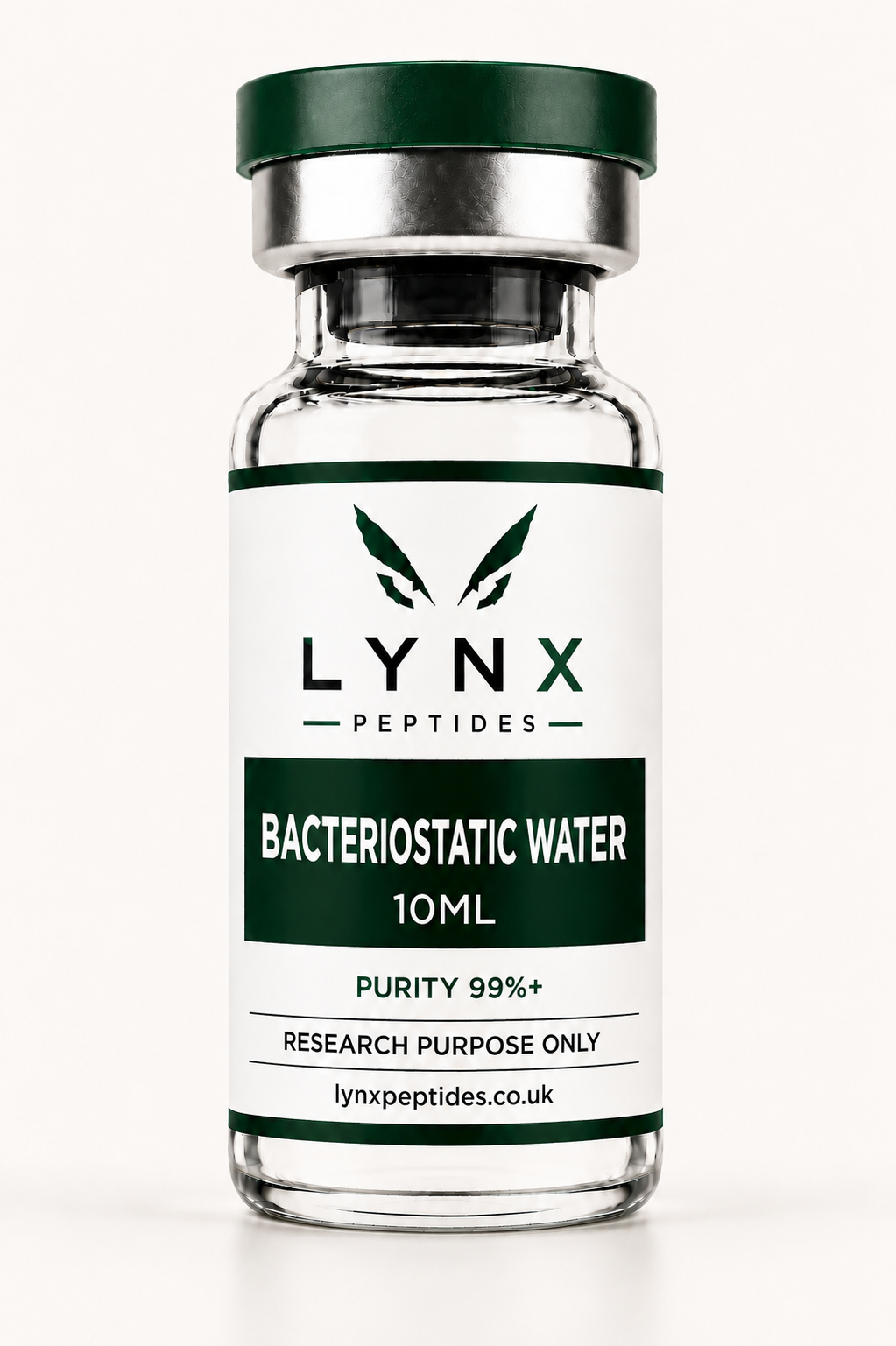
Bacteriostatic water is a sterile diluent containing 0.9% benzyl alcohol, a preservative that inhibits bacterial growth. It is commonly used to reconstitute lyophilised (freeze-dried) research peptides, dissolving the powder into a liquid solution for laboratory use. The volume added determines the final concentration.
What you’ll need
Have these essentials ready before you start.
- Lyophilised peptide vial
- Bacteriostatic water, where suitable for your peptide
- Sterile syringe or other measuring equipment
- Alcohol swabs
- Clean, dust-free workspace
Bacteriostatic water vs sterile water
Bacteriostatic water is sterile water with an added preservative. Lynx Bacteriostatic Water contains 0.9% benzyl alcohol, which helps limit bacterial growth when the vial is accessed. It does not sterilise contaminated powder or replace clean handling.
Preservative-free sterile water has no added antimicrobial preservative. The choice depends on how well the peptide dissolves and whether the preservative could affect your experiment.
Some peptides need a different liquid or a controlled pH to dissolve properly. Follow the preparation instructions for your peptide rather than choosing water by name alone.
A preservative helps with microbial control, but it does not stop every type of chemical change. The storage life of a prepared peptide solution therefore needs separate evidence.
How to reconstitute peptides, step by step
These steps explain the process. Use the preparation instructions for your peptide to choose the liquid, amount and mixing conditions.
Identify your peptide
Check the vial name, amount and batch details so you know exactly what you are preparing.
Choose the right liquid
Use the liquid specified for the peptide and your experiment. Water alone may not dissolve every peptide.
Get everything ready
Clean the workspace and gather suitable measuring equipment, swabs and a label.
Prepare the solution
Follow the preparation instructions, using clean equipment and the specified mixing approach. Check any remaining powder or unexpected changes before proceeding.
Calculate the concentration
Divide the peptide amount by the final solution volume, keeping the units consistent.
Label and store
Record the contents, concentration and preparation date. Use the storage conditions for that peptide and solution.
Calculating peptide concentration
Concentration tells you how much peptide is present in each millilitre of solution. Divide the peptide amount by the final solution volume.
- Peptide amount
- 5 mg
- Final solution volume
- 2 mL
- Resulting concentration
- 2.5 mg/mL
5 mg ÷ 2 mL = 2.5 mg/mL
Open peptide calculatorThis example assumes all 5 mg is dissolved in a final volume of 2 mL. Final volume means the total solution after dissolving the powder, which can differ from the water added. The size of the vial is not the volume to use in the calculation.
The calculation is an estimate when you use the label amount or an unmeasured final volume. For more precise work, account for net peptide content and any losses during preparation.
Storage and common mistakes
Dry powder, a prepared peptide solution and a vial of bacteriostatic water can need different storage conditions. Keep them separate when reading storage advice.
- Unopened freeze-dried peptides
- Keep the vial closed, dry and protected from light. Some peptides are stored frozen for longer periods, for example at −20°C, but only where their product instructions support it.
- Reconstituted peptide solutions
- Refrigerated storage means approximately 2–8°C. This is common for some prepared solutions, but it is not suitable for every peptide or formulation. Use the temperature and time specified for your solution, and avoid repeated warming or freeze–thaw cycles unless they are allowed.
- Unopened bacteriostatic water
- Lynx lists room-temperature storage at 20–25°C, away from direct light. Do not freeze it. These instructions apply to the water itself; they do not set the storage conditions for a peptide mixed with it.
Temperature alone cannot tell you how long a solution will remain suitable. Our peptide storage guide explains the factors in more detail.
Common mistakes to avoid
- Choosing water that does not suit the peptideThe powder may not fully dissolve, or the preservative may affect the experiment.
- Confusing water added with final volumeUse the measured final solution volume where accuracy matters. Otherwise, record the result as an estimate.
- Mixing up the unitsCheck mg, micrograms and mL before calculating. There are 1,000 micrograms in 1 mg.
- Relying on the preservative to keep things cleanUse clean equipment and careful handling. Benzyl alcohol does not remove contamination.
- Using the wrong storage adviceFollow the instructions for the prepared solution, not just the unopened powder or water. Label the vial so its contents and preparation date are clear.
Frequently asked questions
What does reconstituting a peptide mean?
It means dissolving freeze-dried peptide powder in a suitable liquid. The prepared solution can then be used in the laboratory work it was made for.
Can I use bacteriostatic water for any peptide?
No. Some peptides do not dissolve well in water, and benzyl alcohol can affect a peptide or the test you are carrying out. Use the liquid specified in the preparation instructions.
Can I use sterile water instead?
Sometimes, if the preparation instructions allow it. Preservative-free sterile water has different handling requirements, so it should not be swapped in simply because it looks the same.
What should I do if powder is still visible?
Do not assume that all of the peptide has dissolved. Check the preparation instructions before changing the liquid or trying to mix it further. Visible particles can also mean that dissolved peptide has come out of solution.
Does a clear solution mean the peptide is unchanged?
No. A peptide can break down or stick to the inside of a vial without making the liquid cloudy. Appearance is useful to record, but it cannot confirm the amount or condition of the peptide.
Should I calculate concentration from the water I add?
Use the final solution volume when it has been measured. If you use the amount of water added instead, the result is an estimate because the two volumes can differ.
Does 99% purity mean the vial contains 99% peptide by weight?
No. An HPLC purity result describes the relative signals in that test, not the proportion of the vial’s total weight made up of peptide. Net peptide content or a suitable quantitative test is needed to measure that amount.
Does bacteriostatic water keep a peptide solution stable for 28 days?
Not necessarily. The commonly quoted 28 days concerns how long certain multidose water vials may be kept after first puncture. It does not set the shelf life of a peptide mixed with that water. The prepared solution needs its own storage instructions.
Can I keep freezing and thawing the same solution?
Avoid repeated cycles unless the instructions for that peptide and solution allow them. Freezing can change a solution, and different peptides respond differently. Smaller portions may help when their storage and handling have been checked.
How do I calculate the concentration of a peptide blend?
Calculate each peptide separately from its own amount and the final solution volume. If only the total blend amount is known, you can calculate the combined concentration, but not the concentration of each ingredient.
Research products and further reading
Explore the available supplies and peptide information. Choose a liquid that suits the peptide and preparation instructions.
-
-
-
Further reading
- Peptide solubilityWhy some peptides need a different liquid.
- Peptide storageTemperature, light and handling explained.
- Freeze-dried peptidesUnderstanding how the powder is supplied.
- Reading a Certificate of AnalysisWhat a batch report can tell you.
For batch information, visit Quality Assurance and the report library. Continue exploring the Research Library, peptide catalogue or MOTS-C product page.