On this page
Two peptides with different molecular identities
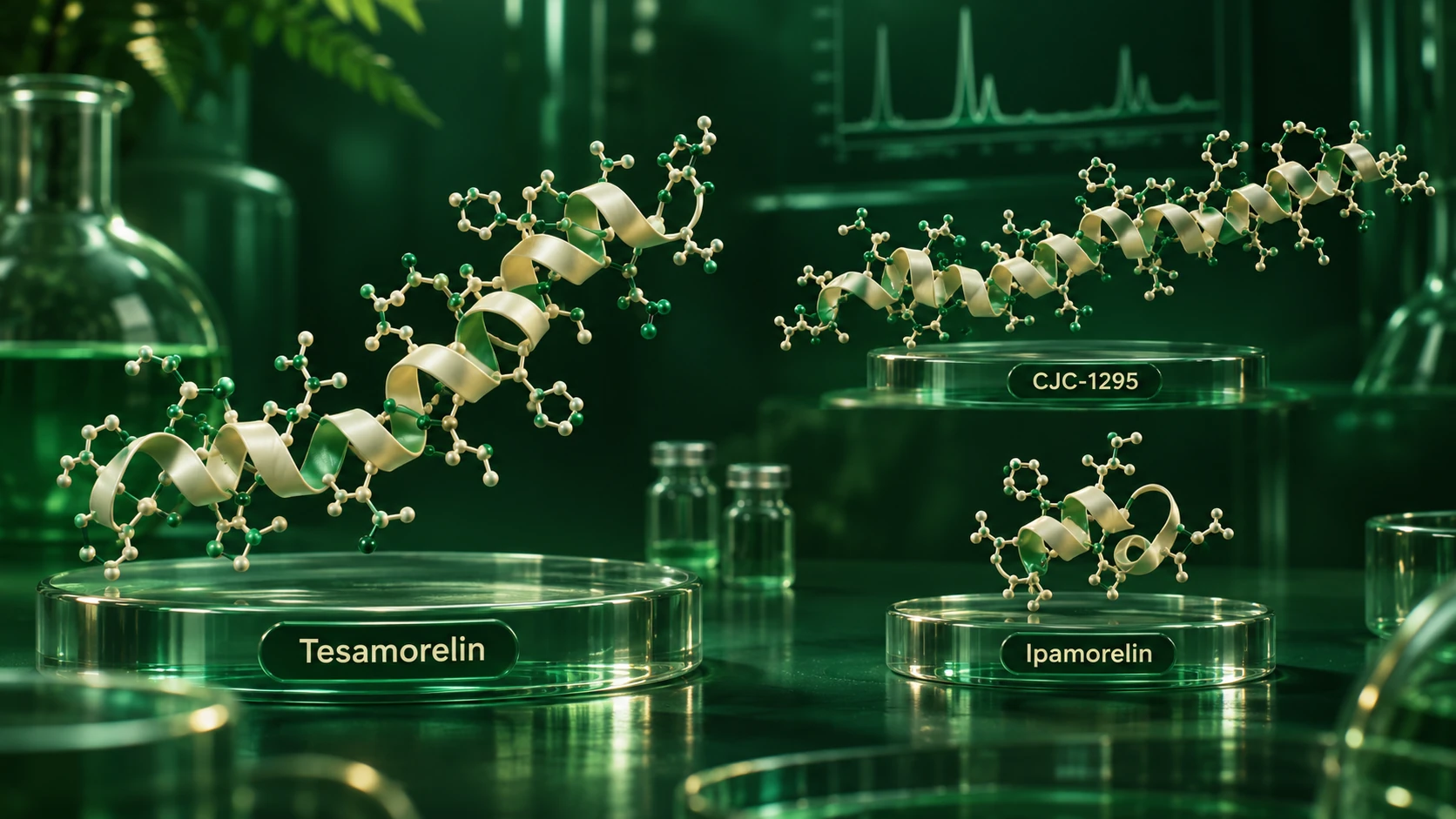
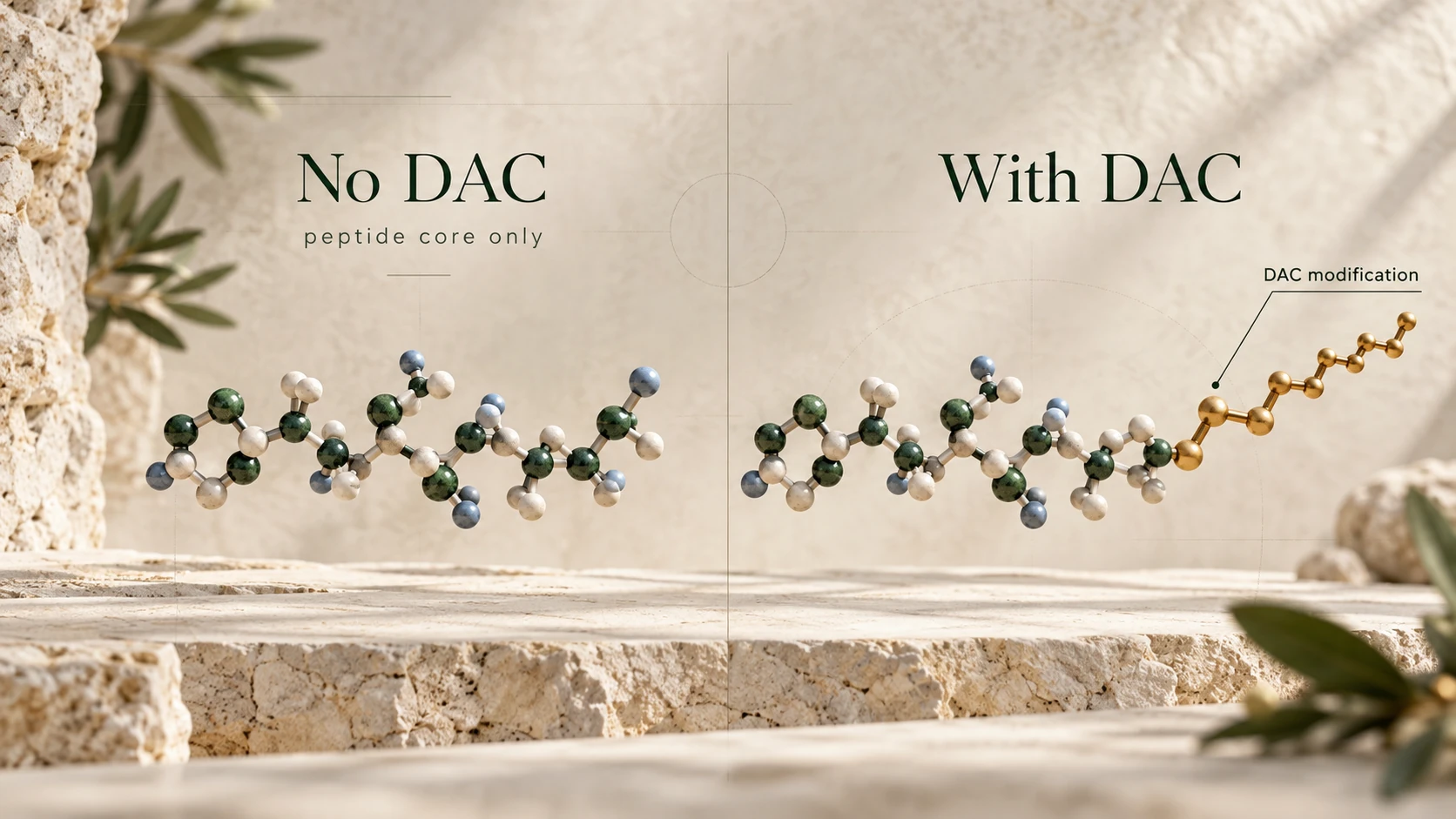
Tesamorelin is a synthetic analogue of the 44-residue growth hormone-releasing hormone, or GHRH. Its N-terminal modification is part of the molecule, rather than another active ingredient mixed with it. The medicinal-product description identifies the modified GHRH sequence. Ipamorelin is a much shorter synthetic pentapeptide containing non-standard residues. Its discovery paper reports Aib–His–D-2-Nal–D-Phe–Lys-NH₂. The D-residue and terminal-amide annotations matter when identifying a sample.
The Lynx catalogue lists tesamorelin and ipamorelin separately as laboratory research materials.
Chain length does not rank their biological potency or safety. Receptor recognition depends on the complete structure, and activity depends on the experimental conditions. The peptide sequence Guide explains how to read these molecular descriptions. Neither the word “peptide” nor a similar downstream hormone response establishes interchangeability.
GHRH signalling and ghrelin-receptor signalling
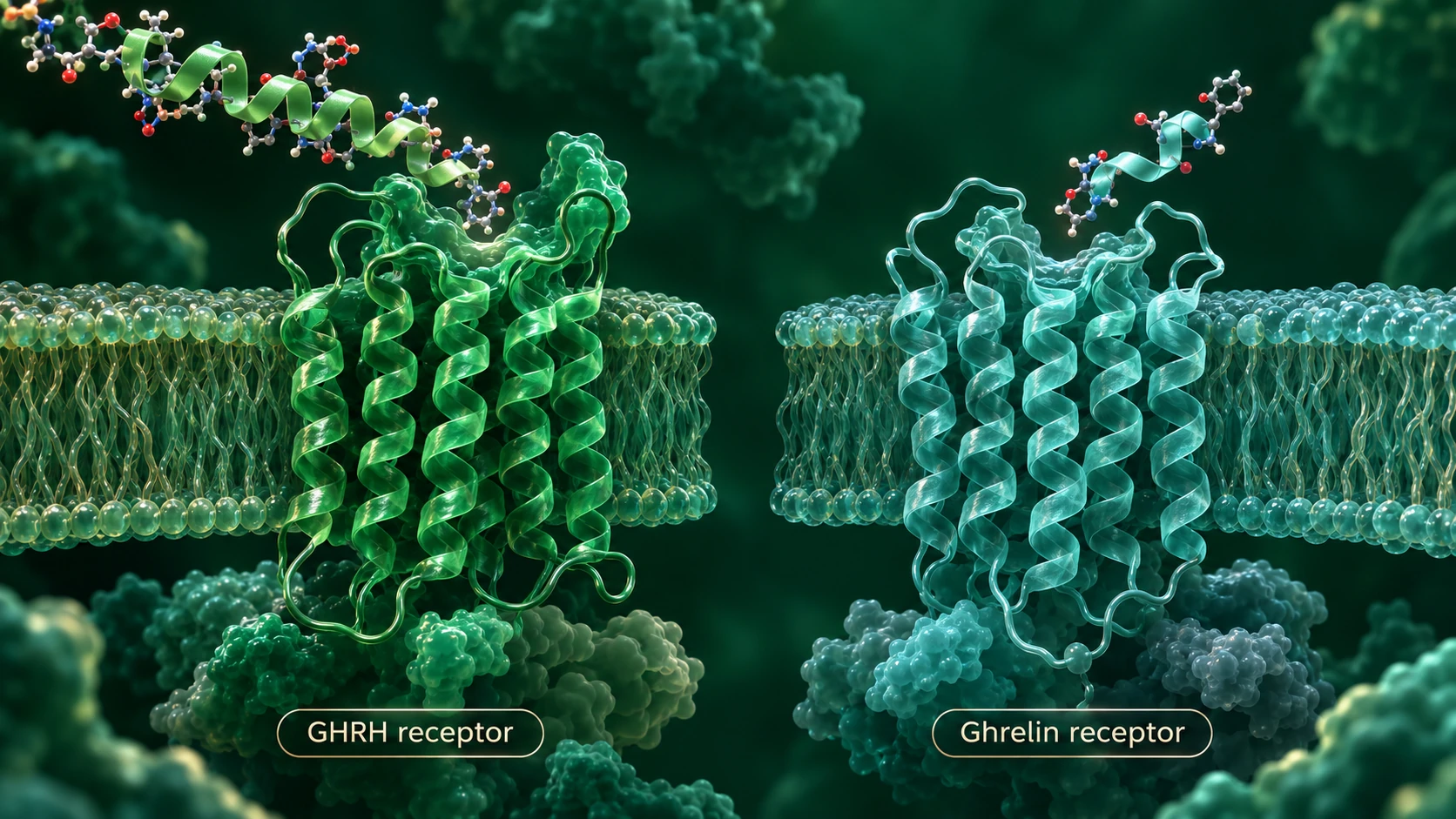
Tesamorelin acts as a GHRH-receptor agonist. In the pituitary, that pathway participates in regulating growth hormone secretion. Ipamorelin acts through the growth hormone secretagogue receptor, commonly called the ghrelin receptor or GHS-R1a. The original ipamorelin experiments used receptor antagonists and cell and animal systems to distinguish its pharmacology from GHRH.
Both routes sit within a regulated endocrine network. Growth hormone release also depends on feedback, somatostatin and the physiological state of the system. IGF-1 is a downstream measurement, not a direct assay of either peptide. A change in GH, a change in IGF-1 and a change in body composition are therefore three different observations.
This distinction helps when reading a comparison that uses “GH stimulation” as its only explanation. Shared access to a pathway does not establish the same exposure profile, tissue response or outcome.
Compare the question each study asked
| Feature | Tesamorelin | Ipamorelin |
|---|---|---|
| Molecular class | Modified 44-residue GHRH analogue | Synthetic five-residue GH secretagogue |
| Principal receptor context | GHRH receptor | Ghrelin receptor / GHS-R1a |
| Human evidence illustrated here | Placebo-controlled HIV-associated abdominal adiposity trials | Volunteer endocrine study and postoperative bowel-resection trial |
| Endpoints | Imaging-based visceral adipose measurements and metabolic/safety outcomes | Peptide exposure, GH response, and a separate gastrointestinal endpoint |
| Direct comparative finding | No head-to-head result in the studies cited | No head-to-head result in the studies cited |
The table organises evidence, rather than selecting a compound for personal use. A study in one population cannot provide the missing control group for a study in another. Differences in route, duration, baseline health and endpoint can dominate any apparent difference between headline results.
Tesamorelin has population-specific clinical evidence
Falutz and colleagues’ 2007 trial randomised adults with HIV-associated abdominal fat accumulation to tesamorelin or placebo and measured visceral adipose tissue. A separate trial with an extension phase examined the same broad clinical problem over a longer period. These studies concern a defined population and clinical intervention.
Imaging a change in visceral adipose tissue answers a more specific question than measuring a transient rise in GH. It still does not demonstrate general weight-loss efficacy in healthy adults, improved athletic performance or a treatment effect from a research catalogue material.
When comparing publications, retain the original population, primary endpoint and follow-up. Background treatment and exclusion criteria also matter. The tesamorelin structure and research Guide provides the fuller account of that programme without turning its findings into a general recommendation.
Ipamorelin human studies address different endpoints
Gobburu and colleagues measured ipamorelin disposition and GH responses in healthy male volunteers. That work supports a pharmacokinetic and pharmacodynamic model. It does not establish long-term benefit or comparative body-composition outcomes.
The 2014 postoperative ileus trial examined recovery after bowel surgery. It enrolled 117 patients and used 114 in the safety and modified intention-to-treat populations. The key efficacy analysis did not show a statistically significant difference from placebo. That finding belongs to a gastrointestinal clinical question, rather than a comparison with tesamorelin.
The existence of human research should neither be ignored nor inflated. Volunteer hormone measurements and a postoperative trial are real human evidence, but their designs cannot answer every claim made about ipamorelin. They also cannot provide a percentage by which it is “better” or “worse” than tesamorelin.
Selectivity is an experimental finding, not a safety guarantee
The early ipamorelin work described selective GH release relative to several other measured hormones in specified animal experiments. That is a pharmacological observation. It does not establish that ipamorelin never alters cortisol in people or that it has fewer adverse effects than tesamorelin under all conditions.
The US tesamorelin label discusses raised IGF-1, glucose intolerance, fluid retention and hypersensitivity, with contraindications including active malignancy. These are reasons to read the safety evidence alongside efficacy. They are not a complete risk assessment for another peptide or for an uncharacterised research preparation.
Cross-trial adverse-event rates are particularly easy to misuse. Different participants, monitoring schedules and exposure periods can change what is detected. The cited literature supplies no validated head-to-head safety ranking.
What would make a stronger comparison?
A direct study would identify both materials, enrol a suitable population, specify a meaningful endpoint in advance and assess harms with adequate follow-up. Random allocation and comparable background conditions would help isolate the effect of the intervention.
Mechanistic work can instead ask a narrower question, such as receptor dependence or hormone-response timing. That can be valuable without standing in for a clinical trial. Readers should distinguish a molecular rationale from a measured human outcome.
Analytical identity is another separate layer. The analytical testing Guide explains why chromatographic purity and mass confirmation do not establish biological equivalence. Research materials should be described by their documented identity, not by borrowing a medicinal product’s clinical record.
Lynx materials are supplied for laboratory research only, not for human or veterinary use, diagnosis or treatment. This Guide provides no dosing or administration instructions.
Frequently asked questions
Are tesamorelin and ipamorelin the same type of peptide?
Both are peptides, but tesamorelin is a GHRH analogue and ipamorelin is a synthetic ghrelin-receptor agonist. Their structures and receptor contexts differ.
Has one been shown superior in a direct clinical trial?
The primary studies cited here do not compare them head to head. Results from different populations and endpoints cannot establish a comparative winner.
Does a larger GH response establish a better outcome?
A hormone response is a measured biological signal. Its clinical significance depends on the research question, population and safety findings.
Does US tesamorelin approval apply to research materials?
An authorisation applies to the specified medicinal product and indication. It does not confer approval on a separately supplied catalogue material.
References and study scope
- Metabolic effects of a growth hormone-releasing factor in patients with HIV. Falutz et al., 2007. Randomised human trial in HIV-associated abdominal adiposity.
- Effects of tesamorelin, a growth hormone-releasing factor, in HIV-infected patients with abdominal fat accumulation: a randomized placebo-controlled trial with a safety extension. Falutz et al., 2010. Human randomised trial and extension.
- EGRIFTA WR prescribing information. US FDA, 2025. US medicinal-product label, not a UK catalogue authorisation.
- Ipamorelin, the first selective growth hormone secretagogue. Raun et al., 1998. Primary cell and animal pharmacology.
- Pharmacokinetic-pharmacodynamic modeling of ipamorelin, a growth hormone releasing peptide, in human volunteers. Gobburu et al., 1999. Human pharmacokinetic and endocrine study.
- Prospective, randomized, controlled, proof-of-concept study of the Ghrelin mimetic ipamorelin for the management of postoperative ileus in bowel resection patients. Beck et al., 2014. Human placebo-controlled postoperative trial.