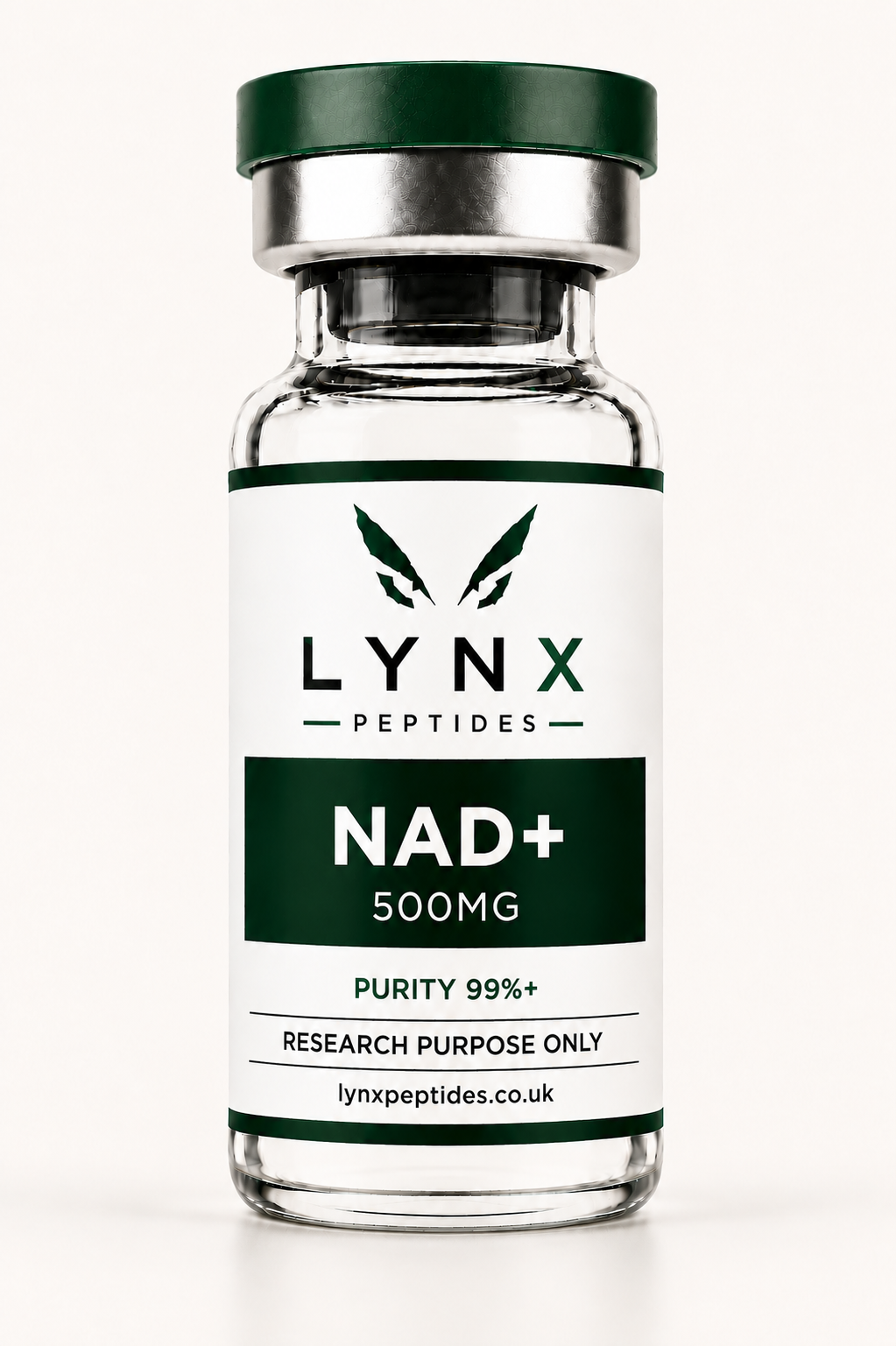
NAD+
A coenzyme that helps cells transfer energy during normal metabolic reactions.
Individually£49.99
In this set£43.99
RESEARCH USE NOTICE
All products on this website are supplied strictly for in-vitro laboratory research.
They are not intended for human or veterinary use, therapeutic application, or bodily introduction.
By entering this site, you confirm:
FIRST-TIME CUSTOMERS
Enter your email and receive a one-time discount code, plus Lynx updates and restock emails, subject to eligibility.
Check your inbox. If eligible, your unique 10% welcome code will be sent by email.
POPULAR SEARCHES
Press Esc to close
Research Set
Cellular bioenergetics and redox biology: NAD+ and Glutathione.
Save 12% · £10.08
Checking stock
A coenzyme that helps cells transfer energy during normal metabolic reactions.
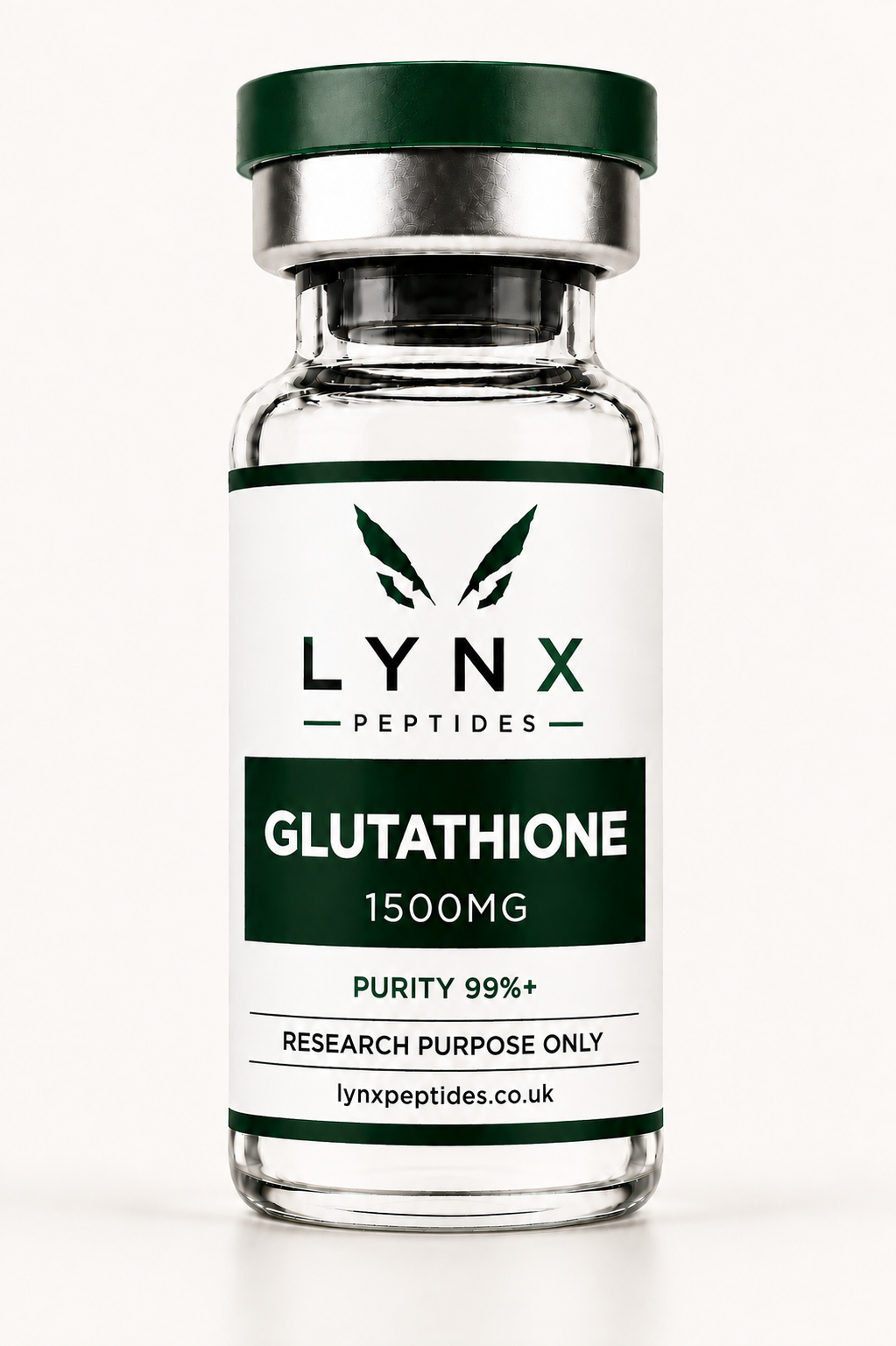
A tripeptide that helps cells manage oxidative stress and maintain their natural redox balance.
NAD+ and glutathione are chemically distinct molecules involved in cellular redox biology. NAD+ primarily participates in electron-transfer reactions and NAD-dependent enzyme activity, while glutathione forms part of a major thiol-based redox system within cells.
Nicotinamide adenine dinucleotide (NAD+) is a coenzyme present in cells and involved in many metabolic reactions. It transfers electrons between reactions by cycling between its oxidised form, NAD+, and reduced form, NADH.
NAD+ participates in pathways including glycolysis, the tricarboxylic acid cycle and mitochondrial oxidative phosphorylation, where electron transfer is central to energy metabolism. It is also consumed as a substrate by enzymes including sirtuins and poly(ADP-ribose) polymerases (PARPs), linking NAD metabolism with areas such as cellular signalling and DNA-damage responses. Cells maintain their NAD pool through several biosynthetic routes, including pathways that use dietary precursors and salvage pathways that recycle nicotinamide and related metabolites. These different roles make NAD+ relevant to research spanning metabolism, cellular redox state and NAD-dependent enzyme activity.
Glutathione is a tripeptide made from glutamate, cysteine and glycine. Its cysteine residue contains a reactive thiol group that allows glutathione to take part in cellular redox reactions.
Glutathione occurs primarily in reduced (GSH) and oxidised (GSSG) forms, and the balance between them is commonly examined in studies of cellular redox state. GSH is used by glutathione-dependent enzymes, including glutathione peroxidases, while glutathione reductase helps regenerate GSH from GSSG using reducing equivalents from NADPH. Glutathione also participates in conjugation reactions catalysed by glutathione S-transferases. Cells synthesise glutathione enzymatically from glutamate, cysteine and glycine, making its synthesis, oxidation and recycling distinct processes that can be examined in redox and oxidative-stress research.
NAD+ and Glutathione are different molecules with different roles in cellular redox biology. NAD+ is a coenzyme that transfers electrons during metabolic reactions and is also used by several NAD-dependent enzymes. Glutathione is a tripeptide made from glutamate, cysteine and glycine, with its cysteine thiol playing an important part in cellular redox chemistry. They are therefore studied in related areas of cell biology, but they are not interchangeable.
NAD+ and NADH are the oxidised and reduced forms of the same redox pair. During certain metabolic reactions, NAD+ accepts electrons and is converted to NADH. NADH can then transfer those reducing equivalents into other reactions. The continuous conversion between NAD+ and NADH is an important part of cellular energy metabolism and redox chemistry.
GSH refers to reduced glutathione, while GSSG refers to glutathione disulfide, its oxidised form. Glutathione can move between these states as part of cellular redox reactions. Researchers often examine GSH, GSSG and their relationship when studying changes in cellular redox conditions and glutathione-dependent enzyme systems.
NAD+ and Glutathione represent different but related areas of cellular redox biology. The NAD+/NADH system is closely involved in metabolic electron transfer, while the glutathione system is centred on thiol redox chemistry and glutathione-dependent reactions. Including both compounds allows these distinct systems to be examined within the broader context of cellular redox and bioenergetic research.
Yes. NAD+ and Glutathione are supplied as two separate vials within the Research Set. They are not combined into a single vial. Each compound retains its own strength, product identity and associated documentation.